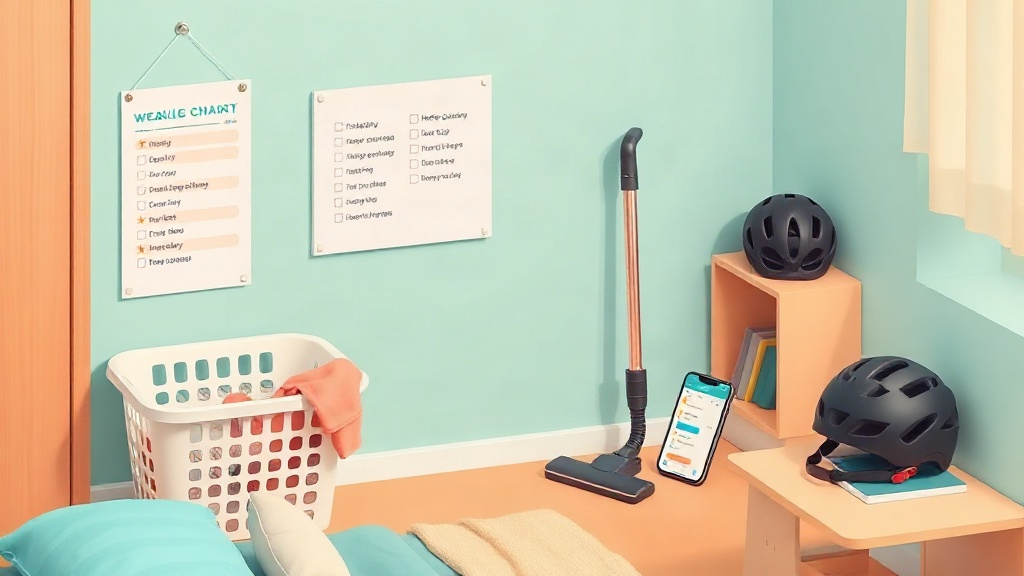
If you've been searching for "digital family organizer," you're not alone. This is one of the most common challenges parents face - and the good news is that evidence-based strategies exist that actually work.
This guide draws on insights from three parenting research books and practical experience from thousands of families using KidKarma. Here's what the research says, and what you can do today.
What the Research Says
Insights from How to Talk so Little Kids Will Listen
Key concepts: Emotional validation, sibling bonding opportunities, conflict management, special one-on-one time, family dynamics adaptation...
Parents can reduce sibling rivalry by validating emotions, creating bonding opportunities, and managing conflicts through problem-solving rather than blame. While these strategies promote harmony, effectiveness varies by family dynamics and individual temperaments.
"Parents can reduce sibling rivalry by validating emotions, creating bonding opportunities, and managing conflicts through problem-solving rather than blame." - from How to Talk so Little Kids Will Listen
Insights from Raising Boys
Key concepts: ADHD as stress response, medication considerations for boys, environmental and cultural factors in attention disorders, genetic and family patterns, holistic approach to ADHD management...
ADHD in boys is likely caused by a combination of factors including stress, culture, environment, and genetics rather than a single cause. Understanding ADHD as a stress response and seeing examples of successful people with ADHD can help parents support their sons effectively.
"ADHD in boys is likely caused by a combination of factors including stress, culture, environment, and genetics rather than a single cause." - from Raising Boys
Practical Tips for Success
- Start small - Begin with one or two chores and build gradually. Overwhelming kids with too many tasks backfires.
- Be consistent - Same chores, same time, same expectations. Consistency builds habits faster than motivation.
- Use positive reinforcement - Acknowledge effort, not just completion. "I noticed you put your shoes away without being asked" is more powerful than sticker charts.
- Make it visual - A chore chart (digital or physical) helps kids see what needs doing. KidKarma's dashboard gives kids ownership of their tasks.
- Let them choose - When possible, let kids pick from a list of chores. Autonomy increases follow-through.
Make Chores Easier with KidKarma
KidKarma turns chore time into character-building time. Our app uses positive reinforcement and age-appropriate suggestions backed by parenting research to help your family build lasting habits.
- Assign chores by family member
- Kids earn karma points for completed tasks
- Set custom rewards that motivate YOUR kids
- Track progress with the family dashboard