Quick Answer
Reward system: A pre-agreed structure that pairs specific chores or behaviors with specific incentives, set up before the task happens. It differs from bribery, which reacts to a meltdown in the moment. A clear system builds predictable habits instead of on-the-spot negotiating.
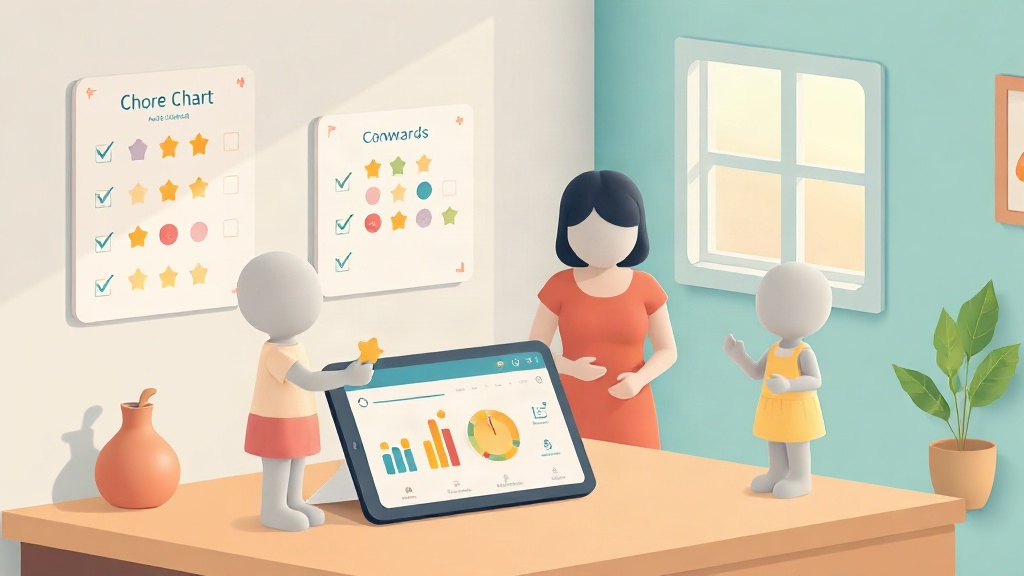
A reward system vs bribery for kids comes down to timing. A reward system is agreed upon before the chore happens; bribery is offered mid-meltdown to buy five minutes of peace. The best reward systems mix tangible rewards, verbal acknowledgment, and natural consequences, and they change as kids grow. This guide covers how to build a chore reward system that works, age-appropriate rewards, and the mistakes that make most charts quietly fail.
What's the Difference Between Bribery and a Reward System?
A reward system is planned in advance and stays consistent; bribery is reactive and gets more expensive every time you use it.
| Bribery | Reward System | |
|---|---|---|
| Timing | Reactive (in the moment) | Proactive (set up in advance) |
| Tone | Desperate ("Please, I'll give you...") | Structured ("Here's how it works") |
| Consistency | Random and escalating | Predictable and stable |
| Result | Short-term compliance | Long-term habit building |
If you're upping the ante mid-tantrum, that's bribery. If the terms were set before the task, that's a reward system. For chore ideas that build the habit without leaning on rewards at all, see ways to make chores fun without bribes.
How Do You Build a Chore Reward System That Works?
Here's how to build a chore reward system that works, in five steps.
Step 1: Define the Tasks
List every chore and responsibility expected of each child. Be specific: "clean your room" is vague; "make bed, pick up floor, put clothes away" is clear.
Step 2: Assign Points or Values
Use a simple point system:
- Quick daily tasks: 1 point
- Medium tasks: 2 points
- Weekly/bigger tasks: 3-5 points
KidKarma's karma point system does this automatically.
Step 3: Set Reward Tiers
Let kids know what their points earn:
- 10 points: Extra 15 minutes screen time
- 25 points: Choose Friday dinner
- 50 points: Small toy or outing
- 100 points: Bigger reward (game, experience)
Step 4: Make Rewards Kid-Chosen
The rewards YOU think are motivating might not match what THEY want. Ask each child to build their own reward menu.
Step 5: Review Monthly
What works in January might not work in April. Check in monthly: are the tasks still appropriate? Are the rewards still motivating?
What Are the Best Rewards for Kids by Age?
Best rewards for kids by age shift as independence grows.
| Age | What Works | What Doesn't |
|---|---|---|
| 2–4 | Stickers, high-fives, small treats | Abstract future rewards |
| 5–7 | Point charts, small privileges | Money (too abstract) |
| 8–10 | Points toward goals, small cash | Over-the-top praise |
| 11–13 | Money, privileges, social rewards | Childish stickers |
| 14+ | Autonomy, real money, trust | Anything that feels babyish |
Should you pay a 5 year old for chores?
Generally no - points and privileges work better at that age, since money is still too abstract to feel motivating. By contrast, rewards that work for teenagers doing chores lean toward autonomy and real money, since that's what actually reads as respect at that age. For task ideas sized to a specific age, see the chore list for early elementary kids.
What Are the Biggest Mistakes With Kids' Reward Charts?
The biggest mistakes with kids' reward charts show up fast:
1. Rewarding what should be automatic. Making the bed doesn't need a reward at age 12 - save points for tasks that go above and beyond.
2. Never adjusting. A system built for a 6-year-old won't fit a 9-year-old. Revisit it.
3. Inconsistent delivery. Promise a reward at 50 points, deliver at 50 points - broken promises kill reward systems fast.
4. All carrots, no sticks. Pair rewards with a natural consequence for skipping chores, or the system only works in one direction.
5. Comparing kids' earnings. Different ages earn different amounts. That's expected, not unfair.
| "In our work with families using KidKarma, the systems that last are the boring ones - same points, same tiers, reviewed monthly. The families that keep changing the rules are the ones who give up first." - Bhagyesh Patel - Parenting & Family Life Editor, KidKarma |
|---|
KidKarma: The Reward System That Scales
Looking for chore apps that track points automatically? KidKarma's karma point system grows with your kids: custom rewards per child, points tracked automatically, and the habit forms without the bribery trap.
• Points earned for completed tasks
• Custom reward menus per child
• Family dashboard for transparency
• Scales from toddlers to teens
KidKarma also builds naturally on teaching responsibility through chores - the reward system is the structure, but the habit is the actual goal.
Frequently Asked Questions
When should I stop using a reward system for my child?
Not all at once - phase it out task by task as a chore becomes routine. By the young-teen years, most families shift from points toward allowance or autonomy for the basics, keeping small rewards only for genuinely above-and-beyond work.
My kid only does chores for the reward. How do I fix that?
Add unrewarded moments of specific praise alongside the point system. Over time this builds the internal motivation that a points-only system can crowd out - a pattern backed by research on autonomy and motivation in early childhood from the American Psychological Association.
Is an allowance the same as a reward system?
Not quite. Allowance is usually paid on a schedule regardless of chores; a reward system ties specific points to specific tasks. Some families blend both - base allowance plus bonus points for extra jobs.
Do reward charts stop working over time?
They can, usually when tiers go stale or delivery gets inconsistent. A monthly review (Step 5 above) is what keeps a chart working past the first few weeks.
How do I reward multiple kids fairly for chores?
Fair doesn't mean equal. Base points on each child's age and task list, not a shared total, and let each child track their own progress separately.
Final Thoughts
A reward system works when it's set up in advance, stays consistent, and grows with your kids - not when it's improvised in the middle of a meltdown. Start with five clearly defined tasks, a simple point scale, and a monthly check-in, and the rest tends to hold together on its own.