A Family Chore Schedule Template That Survives Real Life
A family chore schedule template works best when it's simple, visible, and repeatable. Start with one chore per child, attach it to a daily rhythm that already exists, and track progress with points or a chart. Consistency beats size. Let it be imperfect.
Here's a memory that stayed with me: the chart I made when my son was four. It had nine boxes, color-coded columns, and a laminated star section. It looked beautiful. It lasted about 36 hours. He didn't ignore the chores because he was lazy. He couldn't see the path. There were too many tasks, too many columns, and too many chances to fail before breakfast.
Here is the thing that surprised me most: the fix wasn't more discipline. It was less. Start with one task. One. For us, it was “put your cup in the sink after breakfast.” That was it. We did it every morning for two weeks. Consistency, not intensity.
That one small ritual taught me what a good template actually needs. A child needs to see the task, know when it happens, and get feedback when it's done. The counter didn't have to shine. The process mattered more than the counter.
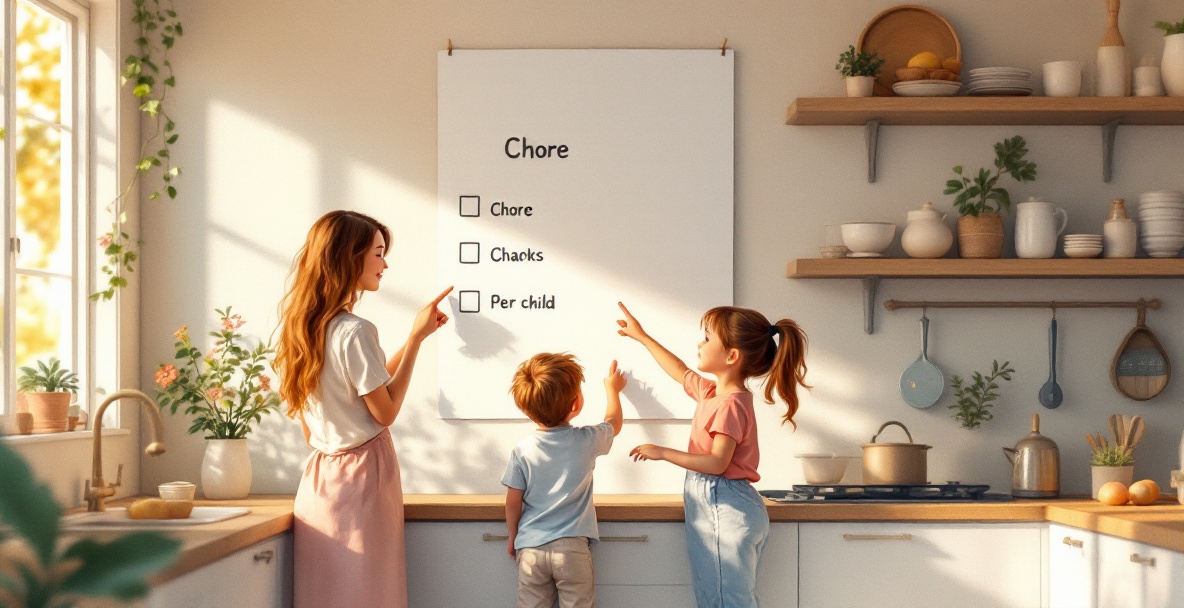
A family chore schedule template gives a child a predictable map. After breakfast, cup in sink. After school, backpack on hook. Before bed, pajamas in the hamper. When the map is simple, a child can follow it without being reminded. When the map is crowded, it stops being a map and becomes a wall of instructions.
What Does a Family Chore Schedule Template Look Like?
A good template doesn't need rows and columns. It needs three parts. One visible task. A consistent time. A simple way to mark progress. For a toddler, that might be a picture of a cup next to a sink. For an early elementary child, it might be a one-item checklist with a small box to check. The format matters less than the rhythm.
Research-backed strategies work for family organization because they make the invisible visible. When a child can see that a task is done, they don't need a parent to remind them. The schedule itself gives the feedback. That's why visual trackers, point systems, and streaks work. They turn routine into a small game with real-world meaning.
If you're building your first template, our age-appropriate chores guide can help you choose the right first task. But don't build the whole system today. Start with one item per child. One.
Why Consistent Routines Matter More Than Perfect Chores
The chore itself is not the point. The routine is. When a child sweeps the same corner every evening, they learn their contribution matters. When they see a streak of completed days, they learn follow-through. Kids build character traits like consistency and contribution through daily practice, especially when progress is visible and effort gets celebrated without demanding perfection.
I saw this for myself one week when everything went sideways. Towels sat unfolded. Toys covered the floor. And my son still put his cup in the sink without being asked. Did the house look perfect? No. But the routine held.
This is also where a chore schedule can reduce conflict. A predictable schedule is not a nag. It's a quiet agreement. When the schedule says bedtime at 7:30, you don't have to argue at 7:45. Every night. Not sometimes. Every time. Predictability is the point, not perfection. And if you miss a night, you simply start again the next day.
How to Make a Co-Parenting Chore Schedule That Works in Both Homes
If your child lives in two homes, the same rule applies, only louder. Consistent routines across both households, like similar chore expectations, mealtimes, and bedtimes, are associated with lower anxiety around custody handoffs. The structure holds even when the adults are exhausted or barely communicating.
The key is not a complicated system. It's a shared one. Start with one concrete task both parents agree on, and make the child the anchor. Instead of “Mom's chore” or “Dad's rule,” call it “Maya's evening job.” That shifts the focus from parent logistics to the child's routine. It also makes the schedule something the child carries with them, not a rule imposed by whichever house they're in.
For separated families, a simple chore schedule template can be the first thing you agree on after the big disagreements. It won't fix the hard stuff, but it will hold the Tuesday night routine steady while everything else shifts. If you're looking for tools, the best co-parenting apps do one thing above all. They give children a predictable routine that travels well. The right app won't repair a difficult goodbye. It will make the next morning feel normal.
Build the Template with One Task, Then Let It Grow
Here's a practical path. Choose one chore per child. Attach it to something that already happens every day, like after breakfast, before screen time, or after bath. Write it down or put it in a kid-friendly app. Use a point or a sticker. Then wait.
When the task becomes automatic, add one more. Growing slowly from a working habit is what succeeds. Co-parenting apps fail when one parent doesn't engage, and family chore systems fail when there are too many boxes to fill. Simplicity beats features. Always.
A good template also leaves room for the occasional miss. When my daughter forgot to make her bed, I used to fix it for her. Now I ask, “What did you notice when you came home from school?” That is problem-solving. In real time. The invitation stays open even after a skipped day. You can try again tonight.
Points, Rewards, and Gentle Accountability
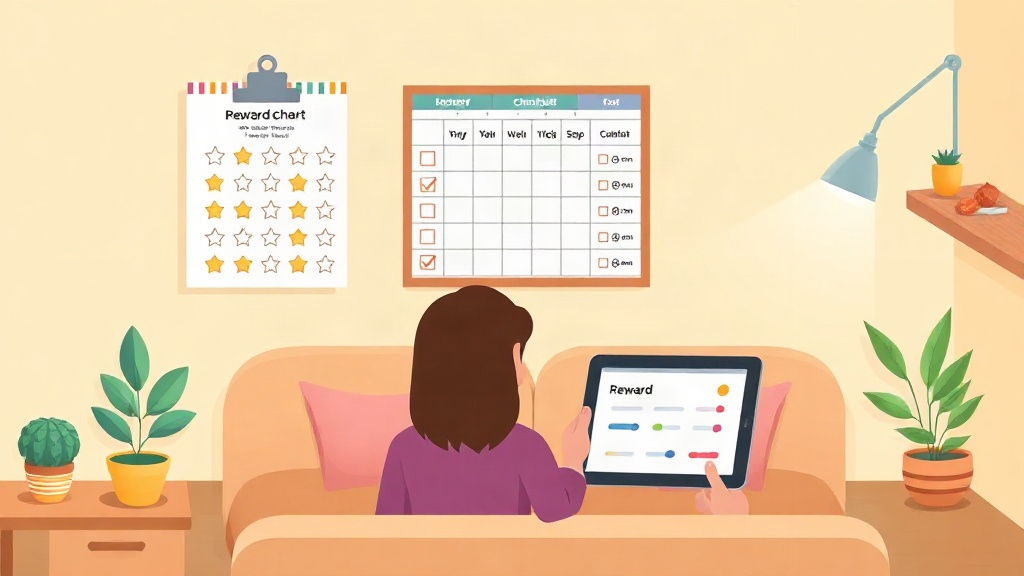
The word “reward” can sound like bribery, but it doesn't have to be. Kids earn points for completed tasks, track streaks, and save those points for rewards the family actually values, like an ice cream trip, a movie night, or extra screen time. That's not a shiny sticker or empty praise. It's visible feedback.
When a task is missed, shame doesn't help. Deduct a point, explain why, and move on. Teach accountability with kindness. A small consequence keeps boundaries clear without breaking the relationship. That balance turns a chore chart into character-building.
If you want the same system in an app, KidKarma is built around these ideas. Tasks kids can see. Points that make progress feel real. Rewards your family chooses together. Gentle penalties delivered without lectures. Powerful tools wrapped in a storybook experience. A QR code login means even young kids can check their own missions without remembering a password.
Let the Template Be Imperfect
The best family chore schedule template is the one you'll actually use on a Thursday when you're tired and the kitchen is sticky. It won't be polished. It will be simple, visible, and forgiving.
A chore schedule is not a performance review. It's a relationship waiting to happen. Every time you ask your child to help, you're saying, I trust you, you belong here, and your contribution counts. That's a message worth scheduling.
If you want to start today, make a small card with one task and put it at eye level. Or use an app that feels like a storybook instead of a spreadsheet. No matter what template you choose, start with one task. One. Let it be imperfect. The invitation stays open.
Key Takeaways
- Start with one task. One.
- Attach the task to something your family already does every day.
- Track progress with points, streaks, or a simple chart.
- In two homes, use the same routine and the same name for the job.
- Use gentle penalties when a task is missed, then invite the child to try again.
Frequently Asked Questions
What is a family chore schedule template?
A family chore schedule template is a simple, visible plan for regular household responsibilities. The best ones have one task per child, a consistent time, and a way to show progress. It should be easy to follow, not exhaustive.
How do I make a chore schedule my toddler will follow?
Start with one task, attach it to an existing routine, and use pictures. A toddler would rather do the thing with you than earn a prize. Let it be imperfect.
How can co-parents keep the same chore schedule in both homes?
Agree on one simple task and give it the same name in both homes. Use visual tracking or an app that shows the child's routine. Consistent routines across households reduce anxiety at handoffs.
Are points and rewards necessary?
No, but visible progress helps. Points, streaks, and family-valued rewards can make consistency feel satisfying without becoming bribes. Pair them with gentle penalties and kind explanations.