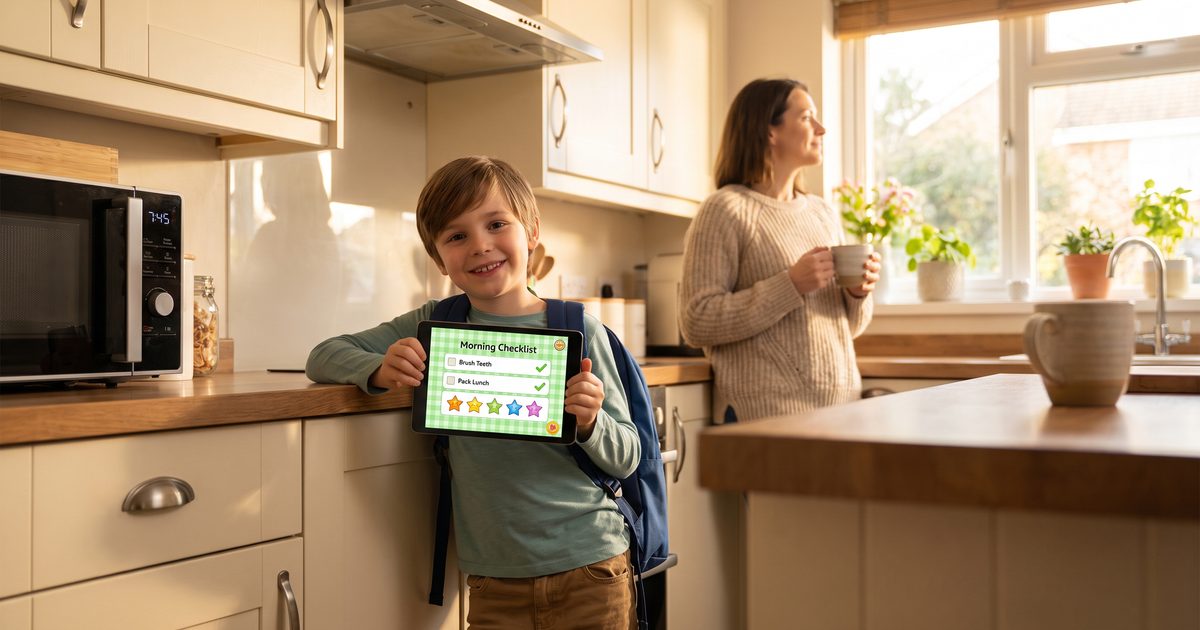
There's a Tuesday morning I still think about. My wife had left for the gym at 6 a.m. I was packing lunchboxes, fielding a meltdown about socks, and silently composing the world's most passive-aggressive grocery list. She came home glowing. I handed her a cold cup of coffee and said nothing. We both knew something was wrong. Neither of us had the language to name it yet.
If that scene lives in your kitchen too, you're not alone - and you're not failing. The imbalance that cracks otherwise good partnerships rarely comes from anyone being selfish. It comes from a structural problem: the invisible work of running a family stays invisible until someone burns out. What changed everything for us was making that work visible. A good family organization app turned our private assumptions into a shared list - and that list changed the conversation entirely.
Why Good Intentions Aren't Enough: The Hidden Imbalance in Dual-Schedule Households
My colleague once described her husband as "a genuinely helpful guy who somehow never noticed the dishwasher." He wasn't lazy. He was operating off a different map of the household. His map had fewer roads on it.
This is the structural mismatch that builds quiet resentment in millions of homes. One partner's free time is obvious - the gym run, the weekend round of golf, the uninterrupted lunch hour. The other's is carved out of work calls in guilty fragments, or not at all. The task counts may be roughly equal on paper. But the visibility of those tasks - and of the rest each person actually gets - is wildly uneven.
What changes that dynamic isn't a better argument. It's a better system. When the full map of household work lives in a shared place that both partners can see, you stop debating feelings and start discussing facts. That's not a small thing. That's the difference between a Tuesday-night fight and a Tuesday-night plan.
The Mental Load Problem: Why Being Home Doesn't Equal Being Off-Duty
I learned this one the hard way, during a weekend I grandly announced I was "taking the afternoon off." I sat on the couch. My son asked me for a snack. Then for help with his Legos. Then to referee a dispute about a throw pillow. By 4 p.m., I had not rested for a single contiguous minute.
Being physically present and being genuinely off-duty are two completely different things. A parent who is home but still being called upon every few minutes is still parenting. The mind is still tracking, still problem-solving, still on. Partners often don't perceive this without it being named explicitly - not because they're careless, but because the labor is invisible by nature.
What works, consistently, is treating personal time the way you treat a dentist appointment. You put it on the calendar. You protect it. One partner takes full ownership of the kids during that block - no questions routed to the other person. That structural clarity does more for a relationship than any amount of goodwill alone.
Making the Invisible Visible: Mapping Who Actually Does What in Your Family
Here's an exercise I did with my wife that made us both genuinely uncomfortable: we spent twenty minutes writing down every recurring task in our household. Everything. The school-form signing, the pediatrician appointment scheduling, the mental note about when the library books were due.
Her list was longer. Not because I was a bad partner. Because I had never seen her list.
When you can see the full picture - in one place, in writing, assigned to actual names - the conversation shifts from I feel like I do more to look, here's the count. A shared family task management system does exactly that. It turns perception into data. And data is a lot easier to divide fairly than feelings.
The goal isn't a perfect 50/50 split every week. Weeks are uneven. What you're building is a shared understanding of the landscape - so that when one person is carrying more, you both know it, and you both choose it, rather than one person discovering it alone at 11 p.m. while folding laundry.
Scheduling Personal Time Like a Non-Negotiable: Why It Has to Go on the Calendar
I resisted this for years. Scheduling my own downtime felt faintly tragic, like I was admitting the spontaneity had leaked out of our life. Then I tried it. It turns out scheduled rest is still rest. And it's dramatically more reliable than hoping circumstances organically produce a break.
Parents who place recurring personal time on a shared calendar - a standing Saturday morning, a Wednesday evening - report better outcomes than those who negotiate it fresh each week. The ad hoc negotiation is its own small burden. You're spending energy asking for the thing before you've even enjoyed it.
Small structural changes compound quickly. One partner taking a consistent solo outing with the child each weekend, for example, gives the other genuine, uninterrupted time without requiring a full overhaul of how your household works. The calendar holds the agreement so the conversation doesn't have to restart from zero every time.
What the Research Says
When Structure Is Actually a Love Language
My son Rohan once asked me why I kept "bossing him around" about chores. I didn't have a good answer. I was assigning tasks, but I wasn't inviting him in.
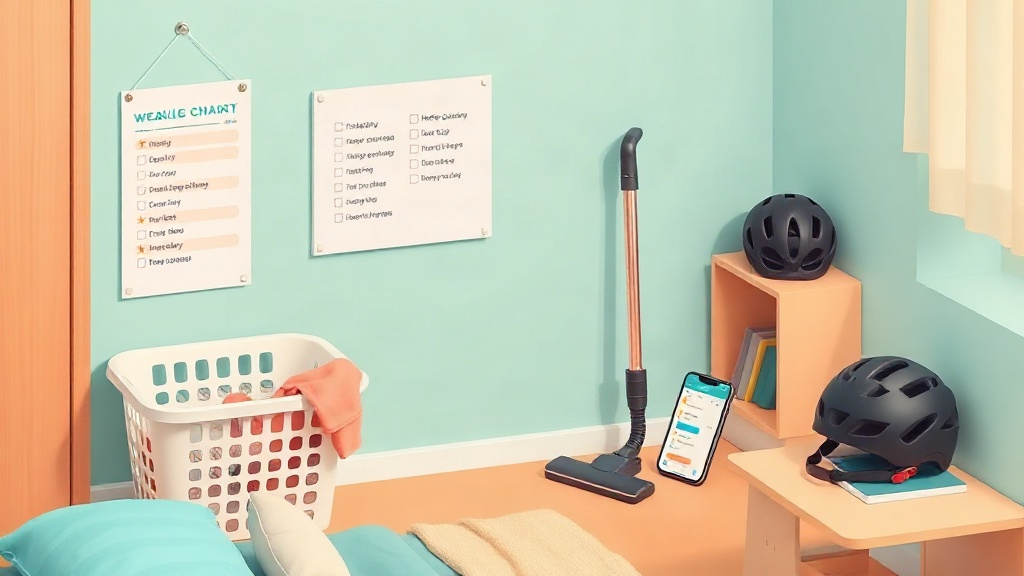
Joanna Faber and Julie King, in How to Talk So Little Kids Will Listen, found something that stopped me mid-coffee-sip. Kids who feel emotionally validated inside family routines - not just directed - show less resistance and more genuine cooperation. The chore chart on our fridge wasn't the problem. The missing piece was ownership. What changed for our family was treating the weekly task list as a negotiation, not a decree. A shared family organization app does exactly that - it puts the list in everyone's hands, not just mine.
Boys, Brains, and the One-Thing-at-a-Time Truth
I used to hand my son a three-step cleanup list and wonder why he'd finish step one and then wander off to find a Lego. Turns out, I wasn't failing at parenting. I was ignoring basic neurology.
Research outlined in Steve Biddulph's Raising Boys describes how boys' brains tend to specialize - focusing deeply on one task before moving to the next, rather than multitasking across items simultaneously. Fighting that wiring is exhausting for everyone. Working with it looks like breaking "clean your room" into four separate, sequential tasks on a shared screen. That single shift made our Sunday afternoons genuinely calmer.
Dad Shows Up When the System Makes Room
Here's something I didn't expect a family organization app to fix: my husband's involvement. Not because he didn't want to help - he did. He just didn't know where he fit in the invisible mental load I was carrying alone.
Biddulph's research also emphasizes that fathers who engage in the daily rhythms of home life - not just the big moments, but the Tuesday-night dishes and the lunchbox-packing - build something irreplaceable with their kids. A shared app turns private household knowledge into common ground. Suddenly, nobody has to ask who's doing what. The system holds it. And that freed-up conversation space? We used it to actually talk to each other.
The research keeps pointing the same direction: kids don't need perfect parents. They need systems that make them feel like they belong in the work.
How a Family Organization App Creates Shared Accountability Between Partners
The first time I opened a shared task list with my wife, she laughed. "There are so many things on here," she said. That was the point.
A family organization app works not because it magically redistributes labor, but because it eliminates the information asymmetry that lets imbalance hide. When both partners can see every task, assigned to a name, with a due date, the conversation changes from why do I always have to ask you to hey, I see the Tuesday pickup is unassigned - I've got it.
The best apps extend this to kids as well. When children are included in the household task system - with age-appropriate responsibilities and visible progress - they stop being passengers in the family's week and start being contributors. That shift matters for partnership burnout too: a ten-year-old who reliably empties the dishwasher is real labor redistributed. It's not a small thing.
KidKarma was built around exactly this idea - that household accountability works best when the whole family can see and own the system together, not just the parent who built it. If you've been carrying the mental load alone, it's worth exploring how a shared chore and task system can make the invisible work finally visible to everyone.
Having the Conversation: How to Talk About Burnout Without Blame
The most useful conversation I ever had with my wife about household imbalance started with a question, not an accusation. I asked her to help me make a list of everything she was tracking mentally that I didn't know about. The list took twenty minutes to write. The conversation that followed took about an hour. We didn't fight. We were both just surprised by the data.
That kind of conversation is easier when you have a shared system to point at. "Here's the list" is a different opener than "I feel like I do everything." One invites problem-solving. The other invites defensiveness. A shared household task tracker gives you something concrete to work from - which is the closest thing to neutral ground most tired parents will find.
A few things that helped us get there:
- Name the distinction between being home and being off-duty. It needs to be said out loud.
- Block personal time before the week starts, not as a reaction to exhaustion but as a standing arrangement.
- Review the task list together weekly - ten minutes, same time, no phones except the shared app.
- Assign tasks by name, not by assumption. Assumption is where resentment lives.
Building a Sustainable Weekly Rhythm with Templates and Shared Task Tracking
Sustainable doesn't mean perfect. Our household rhythm has slipped plenty of times - a sick week, a work crunch, a string of Tuesdays where nobody touched the laundry basket. What kept us from sliding permanently was having a system to return to.
A weekly template - tasks assigned, time blocks protected, personal time scheduled - works like a reset button. You don't have to rebuild the whole thing from scratch each Sunday. You adjust what needs adjusting and you run it again. That's the structural change that outlasts motivation.
What I've found, both as a teacher watching family dynamics and as a parent living inside one, is that the families who stay balanced aren't the ones who care more. They're the ones who got the infrastructure right. They made the work visible. They put the rest on the calendar. They built a system that doesn't depend on one person holding everything in their head.
That's not a romantic solution. But it is a real one.
Final Thought
The chore chart on the fridge was never the problem. The problem was that only one of us could read it.