The best parenting tools aren't the ones that make your household run smoother. They're the ones that quietly help you become the parent you actually meant to be - especially when the one you were raised by keeps showing up uninvited.
If you're looking for good parenting apps that go beyond chore charts and screen timers, you're probably already parenting differently than you were raised. This article is for you.
Why So Many Parents Are Rethinking How They Were Raised
My daughter was seven when my mother first told her to "stop being so dramatic" over a scraped knee. Nothing serious. A small tumble, a big cry. Standard Tuesday afternoon.
I watched my daughter's face change - that flicker of shame replacing the tears. I knew that flicker. I'd worn it myself for years.
What surprised me wasn't my mother's response. It was my own. For a half-second, I almost said the same thing. You're fine. Walk it off. The words were right there, pre-loaded, like a reflex I'd been running on for thirty-five years. I caught myself. But it was close.
That moment - the near-miss - is something a lot of parents today know intimately. We grew up hearing "toughen up" and "stop crying." We swore we'd do it differently. And then we opened our mouths and our own childhoods came out.
The parents I talk to aren't looking for apps that help them control their kids more efficiently. They're looking for family apps that actually help them build something new - a household culture that feels different, on purpose, every single day.
That's a different job. And it requires different tools.
The Emotional Patterns We Inherit (And Can Choose to Break)
There's a particular kind of exhaustion in conscious parenting. It's not the exhaustion of doing too much. It's the exhaustion of watching yourself, constantly, for the old patterns.
You grow up in a house where feelings were dismissed or mocked. You become an adult who swears you'll do better. Then your kid cries over a Lego set at 7 p.m. and you feel the irritation rising before you can name it.
The generational cycle of emotional dismissal rarely comes from cruelty. It comes from habit. From the scripts we absorbed so early we mistook them for personality.
What I've seen - in classrooms, in conversations with parents, in my own kitchen - is that breaking the cycle isn't a one-time decision. It's a daily practice. It requires predictability, structure, and something concrete to grab onto when the old reflexes fire up.
That's part of why good parenting apps matter more to this generation of parents than to any before us. Not because we need our phones to raise our kids. But because we need scaffolding - visible, consistent reminders of the family culture we're actively choosing to build.
What the Research Says About What Good Parenting Actually Looks Like
Being Right Matters Less Than Being Present
My son once caught me mid-lecture, looked me dead in the eye, and said, "Dad, you're guessing." He was eight. He was correct.
That moment stuck with me when I read Raising Boys, which argues that the most effective parents are the ones who admit uncertainty out loud. Not the ones with the perfect chore chart or the color-coded schedule on the fridge. The ones who say, "I got that wrong. Let me try again." Research in that book suggests that modeling mistake-recovery - actually showing your kid what course-correction looks like - builds more trust than always having the answer ready.
A good parenting app shouldn't make you feel like an expert. It should give you a place to practice.
Strength-First Parenting Changes Everything
Here's what shifted our whole kitchen-table dynamic: I stopped trying to fix my daughter and started watching what she was already good at.
Research in Raising Girls Who Like Themselves makes a compelling case for what the authors call "seed parenting" - nurturing what's already growing in your child, rather than sculpting them into what you imagined. Strength-based attention, the kind where you notice and name what your kid does naturally well, produces more genuine confidence than any amount of corrective feedback. The "good girl" trap - praising compliance over authenticity - quietly teaches kids that being liked matters more than being real.
When our allowance jar became about effort and character instead of perfect task completion, something loosened up at home.
Calm Is a Tool, Not a Personality Trait
I am not a naturally calm person. I have burned toast dramatically. But Raising Boys frames calm authority not as a temperament you're born with - it's a skill you build deliberately, like folding a fitted sheet (badly, at first, always).
The research is clear: yelling creates compliance through fear, not cooperation through understanding. Staying clear and consistent, even when your kid is melting down over whose turn it is to feed the dog, is what actually builds the family culture you're after.
Dads especially, the research notes, often fight an invisible current - old scripts about distance and authority. Choosing to stay warm and hands-on is an active decision, not a default.
The best tool in your parenting toolkit isn't an app. It's showing up imperfectly, every single day.
How Predictable Structure and Routines Build Emotional Security
My most anxious students - the ones who struggled most in class - almost always had something in common. Not difficult home lives, necessarily. Unpredictable ones.
Kids whose households lacked consistent rhythm struggled to trust that things would be okay. The anxiety wasn't about the hard stuff. It was about not knowing what came next.
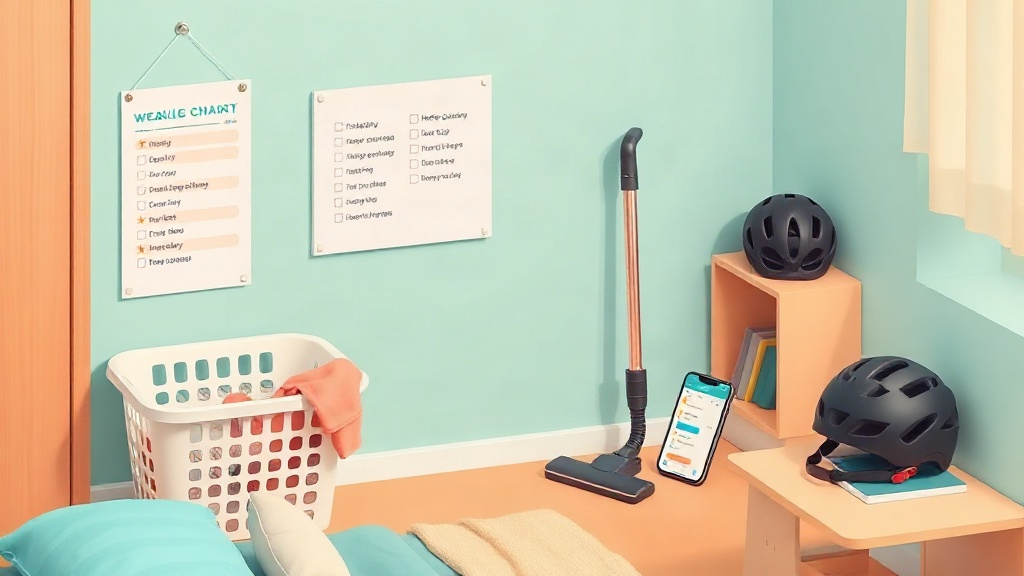
What I've watched in homes where intentional parenting is working is that the predictability itself becomes the gift. The chore chart on the fridge isn't about dishes. It's about knowing that Tuesday has a shape. That your role in this family is real and expected and valued. That the grownups have thought it through.
For parents who grew up in emotionally inconsistent households, building that structure is genuinely hard. It means creating something you never had a model for. That's where daily systems help - not as a replacement for connection, but as the container that makes consistent connection possible.
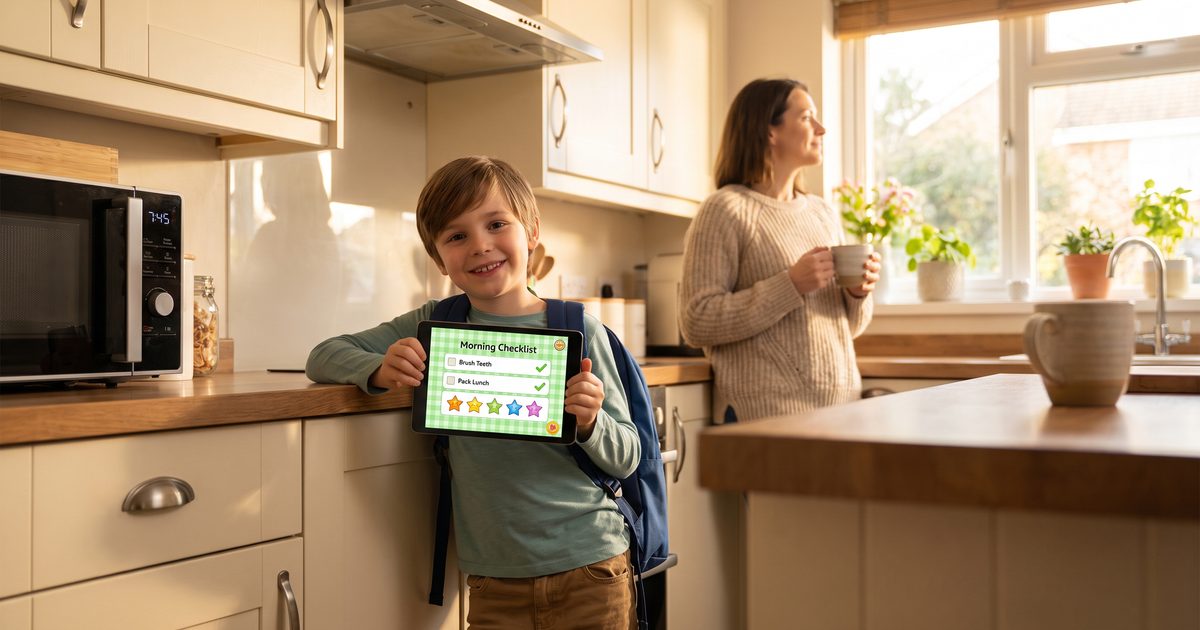
A family responsibility app that keeps expectations clear and visible isn't a parenting shortcut. It's a foundation. → How to use chore systems to build emotional safety in kids
Good Parenting Apps That Reinforce Positive Family Dynamics
Not every parenting app is built with the same philosophy. Some are built to control behavior. Some are built to track completion. The ones worth your time are built around a different question: What kind of family culture are we building here?
Here's what to look for in good parenting apps designed for intentional families:
They center effort and character, not just completion. A task marked "done" shouldn't be the goal. Look for apps that give kids language around how they contributed - with care, with effort, without being asked twice.
They reduce friction around expectations. The most reactive parenting moments happen when expectations are unclear. A visible, shared system removes the argument about whose turn it is or whether the laundry basket needs emptying. It's harder to lose your temper at a shared screen than at each other.
They give kids visible ownership. Children who can see their own contributions - really see them, not just hear about them - develop a different relationship with responsibility. It shifts from something done to them, to something they're actively part of.
They're flexible enough for real life. Tuesday afternoons fall apart. Someone gets sick. Homework explodes. A good app bends without breaking - it's a structure that accommodates life, not one that adds guilt when life interrupts.
KidKarma was built with exactly this kind of family in mind - the ones who are consciously trying to do things differently, and who want a daily system that reflects their actual values, not just their task list.
Using Chores and Responsibilities as Tools for Connection, Not Control
I spent three years as a middle school homeroom teacher before I became a parent. I thought I understood responsibility. Then my son refused to bring his lunchbox in from the car for six consecutive weeks.
Six weeks. I counted.
What I eventually understood - slowly, after too many lectures that went nowhere - was that my son wasn't defiant. He was disengaged. The lunchbox didn't feel like his problem. It felt like mine.
The shift happened when I stopped enforcing and started involving. When the conversation moved from "you need to do this" to "here's what our family needs, and here's where you fit." Small change. Enormous difference.
Chores done from fear produce resentment. Chores done from belonging produce kids who grow up knowing they matter to their household. Those are different outcomes, and they come from different approaches.
The families I've watched get this right aren't running perfect households. They're running households where kids understand why the laundry basket matters. Where the allowance jar is connected to something larger than pocket money. Where the bedtime routine has a rhythm that everyone can predict and trust.
That's the infrastructure of emotional safety. It looks like a chore chart. It works like a foundation.
Building the Family Culture You Wish You'd Had
Here's the thing nobody tells you about intentional parenting: it's not about being better than your parents. It's about being awake in a way they maybe weren't taught to be.
Most of us who grew up in households where emotions were minimized or mocked had parents who were doing their best with the tools they had. They didn't have the research. They didn't have the language. They didn't have the apps, for what it's worth.
We do.
And the parents who are using that advantage well aren't the ones with the most sophisticated systems. They're the ones who caught themselves at the kitchen table - mid-lecture, mid-eye-roll, mid-"you're fine" - and chose something different instead.
That choice, made daily, is what a new family culture is built from. Apps help. Structure helps. Research helps. But the core material is the moment when the old script fires and you decide, again, not to run it.
That's the work. Everything else is scaffolding.
Final Thought
The families who do this well aren't the ones with the cleanest systems - they're the ones who decided that the culture they build at home matters more than the one they inherited.