How to Make Chores Fun for Kids (Without Screens)
"Chores" and "fun" don't usually go together — but they can. The trick isn't making chores entertaining (they're still chores). It's making the experience around them enjoyable enough that kids don't dread them. Here's how, without handing them a tablet.
Key takeaway: Fun chores aren't about gamification gimmicks. They're about connection, challenge, and ownership. Kids who enjoy the process stick with it long after the novelty wears off.
10 Ways to Make Chores More Enjoyable
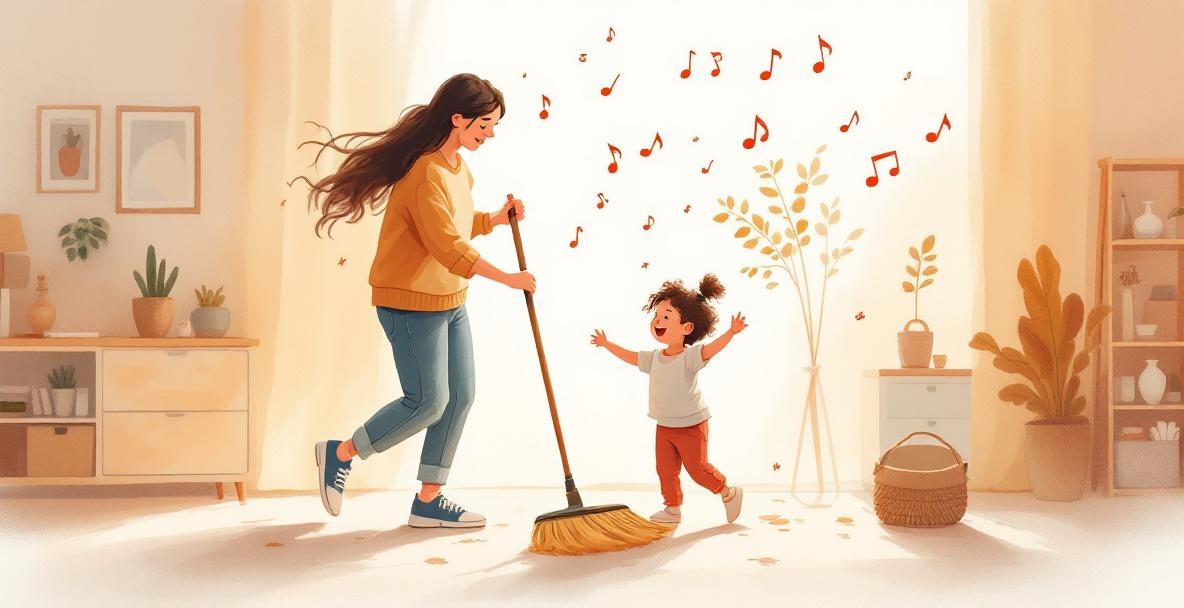
1. The Music Method
Put on a playlist and challenge kids to finish before the album ends. Music changes the energy of any task. Let them pick the playlist for bonus buy-in.
2. Beat the Clock
Set a timer and challenge them to finish before it rings. This works especially well for ages 5-10. "Can you make your bed in under 2 minutes?" turns routine into a personal challenge.
3. Chore Dice
Write chores on a DIY dice or use a spinner. Rolling for your chore adds an element of surprise. Kids are more willing to do an unpleasant task when "the dice decided."
4. Partner Up
Pair siblings or parent-child for team chores. Working together is always more fun than working alone. Plus it builds cooperation skills.
5. Mystery Reward
Once a week, hide a small reward (treat, privilege, sticker) behind a completed task. Kids don't know which task has the reward, so they do them all with more enthusiasm.
6. Before/After Photos
Let kids take a "before" photo of the messy room and an "after" photo when done. The visual transformation is satisfying and share-worthy.
7. Role Play
"You're the Head Chef and I'm your sous chef" during kitchen cleanup, or "You're the Hotel Inspector" during room cleaning. Preschoolers and early elementary kids love this.
8. Family Power Hour
Every Saturday morning, the whole family does chores for one hour together. Same start, same finish, then a fun activity afterward. The shared effort normalizes chores.
9. Level Up System
Create skill levels: "Beginner Cleaner → Kitchen Pro → Master Chef." Kids advance as they learn new tasks. KidKarma's karma points support this naturally.
10. Let Them Own the Method
Instead of dictating HOW to clean their room, just set the standard: "I should be able to see the floor and the bed should be made." Let them figure out the process. Ownership makes boring tasks feel less boring.
What NOT to Do
- Don't bribe with screen time — "Do your chores and you can watch TV" makes screens the goal and chores the obstacle
- Don't force enthusiasm — "Isn't this FUN?!" while scrubbing the toilet fools nobody. Be honest: some chores are boring, and that's okay
- Don't over-gamify — Too many games and rewards can make normal chores feel impossible without entertainment
Common Questions
My kid says chores are boring no matter what I try.
That's fine — some chores ARE boring. Not everything needs to be fun. The goal is making the system tolerable, not turning housework into Disneyland.
At what age can I stop trying to make chores fun?
By age 10-12, most kids accept that chores are just part of life. Focus less on fun and more on efficiency and independence.
Do these techniques work for neurodivergent kids?
Many do — especially timers, music, and visual progress tracking. Adjust based on your child's specific needs. KidKarma's visual task completion works well for kids who benefit from clear structure.
KidKarma Makes Chores Engaging
KidKarma adds just enough engagement to keep kids motivated — karma points, streaks, and rewards — without turning chores into a screen-based game.
- Points and streaks add light motivation
- Custom rewards keep it personal
- No screen dependency — check and go
- Works for all ages and personalities
Last updated: March 2026