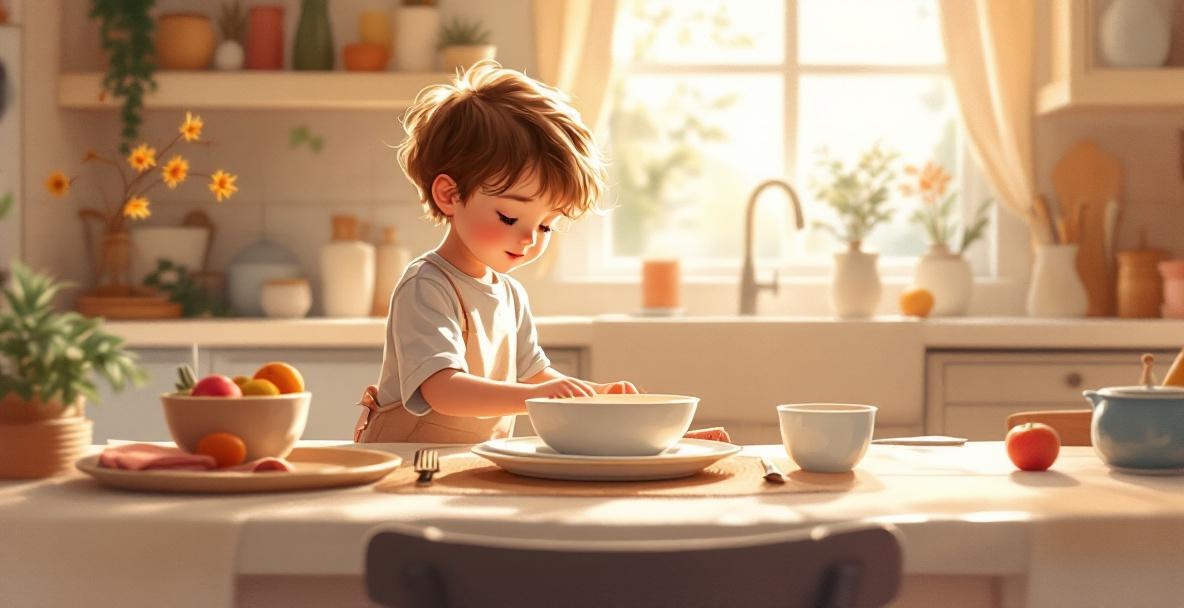
At 6-7, kids enter a new phase. They're in school, developing real independence, and can handle chores that require more steps and responsibility. This guide covers what tasks fit this age and how to keep them engaged.
Key takeaway: Early elementary kids can manage chores with minimal supervision. This is the age to build genuine responsibility - not just compliance.
What Changes at 6-7
This age group brings new capabilities:
- Reading and writing basics - Written chore lists become useful
- Longer attention spans - Tasks that take 10-15 minutes are manageable
- Social awareness - They understand fairness ("why does my brother do less?") and respond well to systems that feel equitable
- Problem-solving - They can figure out simple challenges without constant guidance
The shift here is from "do this task" to "you're responsible for this."
Early Elementary Chore Chart (6-7 Year Olds)
| Chore | Difficulty | Frequency |
|---|---|---|
| Make bed fully | Easy | Daily |
| Pack and unpack school bag | Easy | Daily |
| Set and clear the table | Easy | Daily |
| Fold and put away laundry | Medium | Weekly |
| Sweep floors (kitchen/dining) | Medium | 2-3x/week |
| Take out trash (small bins) | Easy | As needed |
| Tidy their room | Medium | Daily |
| Help prepare simple snacks | Medium | Daily |
| Water indoor/outdoor plants | Easy | 2-3x/week |
| Wipe bathroom sink | Medium | Weekly |
Pro tip: At this age, give them ownership of specific zones. "You're in charge of keeping the hallway shoes tidy" works better than a rotating list.
Tips for Early Elementary Kids
- Use a checklist they manage themselves - A whiteboard on their door or a KidKarma task list they check off builds ownership.
- Introduce time expectations - "Tidy your room before dinner" gives a clear deadline without micromanaging.
- Connect chores to privileges - Screen time, playdates, or dessert can follow completed responsibilities. Frame it as "first this, then that" - not punishment.
- Teach quality, not just completion - Now's the time to gently raise the bar. Show them what a "properly made bed" looks like.
- Acknowledge without overdoing it - At 6-7, kids want to feel capable, not babied. A simple "thanks for handling that" goes further than elaborate praise.
Make It Easy with KidKarma
KidKarma gives early elementary kids real ownership. They see their tasks, check them off, earn karma points, and track their progress - all on their own.
- Age-appropriate task suggestions
- Karma points and custom rewards
- Family dashboard so everyone sees the plan
- No nagging required