Quick Answer
Age-appropriate chores are household tasks matched to a child's physical, cognitive, and emotional development stage rather than assigned by convenience. A task counts as age-appropriate when a child can complete it safely with a realistic level of guidance. Get the match right and chores build capability; get it wrong in either direction and they build frustration instead.
Key Takeaways
- Chores should match developmental stages, not just age - toddlers (2-3) can stack toys and feed pets with help; teens (13-17) can cook full meals and handle car maintenance independently.
- Most parents underestimate kids - err on the side of challenging them rather than waiting until they seem "ready."
- Daily chore load scales with age: 1-2 tasks/5-10 min for toddlers up to 5+ tasks/45-60 min for teens.
- Start early (age 2-3) - age 8+ is the hardest time to introduce chores from scratch.
- Give any new chore system at least six weeks before judging it - the first two weeks are always rocky.
- Assign chores by skill and interest, not gender, and keep baseline chores separate from allowance.
Most parents underestimate what their child can handle. A toddler can put toys away and help feed the family pet with supervision. By age 8 or 9, most kids can run a dishwasher, vacuum a room, and pack their own lunch. Teenagers can cook a full meal and manage their own laundry start to finish. This guide breaks down realistic, age-by-age chores from 2 through 17, how many chores is reasonable per day, and how long a new routine takes to stick.
Quick Reference: Chores by Age
Use this as a starting point, then adjust for your child's temperament and prior experience.
What chores can toddlers (ages 2-3) do?
- Put toys in bins
- Place dirty clothes in the hamper
- Wipe spills with help
- Help feed pets (with supervision)
- Stack books on shelves
- Put their shoes by the door
- Carry their cup or plate to the counter
- Help put away groceries (unbreakable items)
For more on building routines at this stage, see our toddler chore ideas guide.
What chores are appropriate for preschoolers (ages 4-5)?
- Handle toddler-level tasks independently
- Make the bed (pull up covers)
- Set the table (unbreakable items)
- Clear their own plate
- Water plants
- Sort laundry by color
- Match socks
- Dust low surfaces
- Get dressed and put pajamas away
See our preschooler chore guide for how to make these stick.
What chores can early elementary kids (ages 6-7) handle?
- Handle preschool-level tasks independently
- Pack and unpack their own school bag
- Fold simple laundry
- Sweep floors
- Help prepare snacks
- Wipe the bathroom sink
- Put away their own clean clothes
- Empty small trash cans
- Feed pets on their own
More ideas in our early elementary chore guide.
What chores are appropriate for elementary kids (ages 8-9)?
- Handle early-elementary tasks independently
- Load and unload the dishwasher
- Vacuum common areas
- Help with meal prep
- Take out trash and recycling
- Clean bathroom surfaces
- Pack their own lunch
- Rake leaves or pull weeds
- Change their own bedsheets with a little help
See our elementary chore guide for more.
What chores can tweens (ages 10-12) do?
- Handle elementary-level tasks independently
- Cook simple meals on their own
- Do a full load of laundry start to finish
- Deep clean bathrooms
- Mow the lawn or shovel snow
- Grocery shop with a list
- Clean the kitchen after dinner
- Walk the dog on their own
- Babysit younger siblings for short periods with an adult home
Our tween chore guide covers how to hand these over.
What chores should teens (13-17) be doing?
- Handle tween-level tasks independently
- Cook full family meals
- Manage their own laundry completely
- Deep clean any room
- Handle basic car maintenance
- Supervise younger siblings
- Plan meals and grocery shop
- Do small home repairs, like changing a light bulb or unclogging a drain
- Run errands on their own
For a detailed list at one age, see chores for 14-year-olds, or our teen chore guide.
Chore Chart by Age at a Glance
| Age | Daily chores | Weekly chores |
|---|---|---|
| 2-3 | Put toys away, clothes in hamper | Help feed pets, put away groceries |
| 4-5 | Make bed, clear plate, set table | Water plants, sort laundry, match socks |
| 6-7 | Pack school bag, put away clothes | Sweep, wipe bathroom sink, empty small trash cans |
| 8-9 | Load or unload dishwasher, pack lunch | Vacuum, take out trash and recycling, clean bathroom surfaces |
| 10-12 | Clean kitchen after dinner, walk the dog | Full load of laundry, cook a simple meal, mow the lawn |
| 13-17 | Cook a family meal, manage own laundry | Deep clean a room, grocery shop, basic car care |
Why do chores need to match the developmental stage?
Each age group unlocks new capabilities. Assign a chore before the underlying skill exists and you get frustration, not help.
| Age | Key development | Unlocked chores |
|---|---|---|
| 2-3 | Gross motor, imitation | Carrying, placing, simple wiping |
| 4-5 | Fine motor, following instructions | Folding, pouring, multi-step tasks |
| 6-7 | Reading, time awareness | Written checklists, timed tasks |
| 8-9 | Problem-solving, independence | Unsupervised tasks, quality standards |
| 10-12 | Abstract thinking, planning | Cooking, scheduling, managing |
| 13+ | Full capability, future planning | Any household task |
A 2025 study published in Humanities and Social Sciences Communications found that 90.4% of children aged 8 to 17 already take part in household chores - evidence that this is a near-universal expectation once kids reach school age, not an exceptional one.
In KidKarma's work with families tracking chores across age gaps of five years or more, the households that succeed treat this table as a floor, not a ceiling - they add the next unlocked chore as soon as a child asks to help, rather than waiting for a birthday.
How many chores per day is reasonable?
| Age | Daily chores | Time per day |
|---|---|---|
| 2-3 | 1-2 tasks | 5-10 minutes |
| 4-5 | 2-3 tasks | 10-15 minutes |
| 6-7 | 3-4 tasks | 15-20 minutes |
| 8-9 | 3-5 tasks | 20-30 minutes |
| 10-12 | 4-6 tasks | 30-45 minutes |
| 13+ | 5+ tasks | 45-60 minutes |
If you're coordinating chores across a wide age range under one roof, see how to divide tasks fairly in our chores for multiple kids guide.
Age-Appropriate Responsibilities Beyond Chores
Chores are only part of the picture. Kids also grow by taking over their own routines, school, and money.
| Age | Self-care | School | Money and time |
|---|---|---|---|
| 2-5 | Brush teeth with help, get dressed, wash hands | Put books away | Wait a few minutes for a turn |
| 6-9 | Shower with reminders, pick out clothes | Pack the backpack, start homework on their own | Save for a small goal |
| 10-12 | Full hygiene routine, set their own alarm | Track assignments and due dates | Manage a weekly allowance |
| 13-17 | Book their own appointments with help, manage medication with oversight | Plan study time, talk to teachers themselves | Budget, earn money outside the home |
Rewards That Work at Each Age
- Ages 2-5: Praise, stickers, and small rewards right away. The reward has to come within minutes.
- Ages 6-9: Points toward a reward they chose, like a trip to the park or picking dinner.
- Ages 10-12: Screen time, later bedtimes, outings, and some cash.
- Teens: Real money, more independence, and privileges like using the car.
Should you pay for chores? Many families keep everyday chores unpaid and pay for extra jobs. See our pros and cons of paying for chores and our chore and allowance app comparison.
What mistakes do parents make with kids' chores?
1. Underestimating kids - most children can handle more than parents think. Err on the side of challenging them.
2. Starting too late - the hardest time to introduce chores is age 8+. Start by age 2-3, when the imitation drive is strongest.
3. One-size-fits-all - different kids develop at different rates. Adjust for your specific child, not just their age.
4. Giving up too soon - the first two weeks of any new chore system are rocky. Stick with it for at least six weeks before judging.
Building a chore routine that sticks
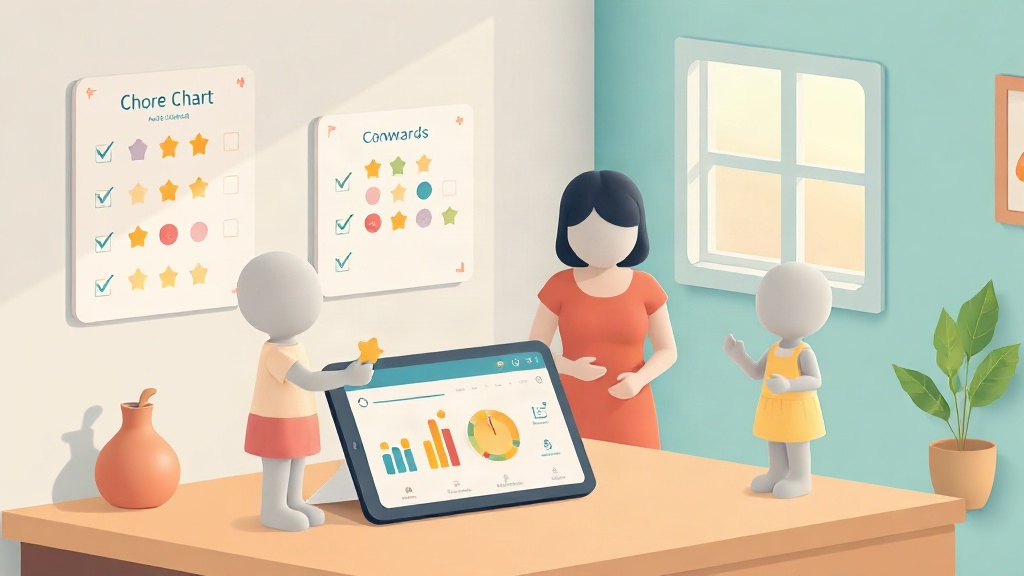
Consistency matters more than the chore list itself. A short daily check-in - even 60 seconds - does more than an elaborate chart nobody looks at after week one. A chore app like KidKarma can do the remembering for you: it suggests chores by age, kids tick them off, and you approve with one tap. For teens who are ready for real ownership rather than reminders, a teen chore system that assigns responsibility instead of supervision tends to hold up longest.
Final Thoughts
Chores don't need a complicated system to work. Match the task to what your child can actually do, keep the list short enough to finish without a fight, and give the habit six weeks before deciding it isn't working. The age ranges above are a starting point - adjust up or down based on your own child, not the calendar.