Growth Mindset Parenting: How to Help Kids Believe They Can Get Better
Quick Answer: Growth mindset parenting teaches children that their abilities can develop through practice, effective strategies, feedback, and learning from mistakes. Instead of making a child's confidence depend on being called smart or receiving praise from others, parents can help them recognize their own progress, take pride in their efforts, and figure out what to try when something doesn't work. The goal isn't to make kids feel good about everything they do. It's to help them believe they can learn and improve.
What Does a Growth Mindset Actually Mean for Kids?
Imagine two children bringing home a math test.
One gets a perfect score. Everyone tells her she's brilliant. She's always been good at math, after all.
The other gets several questions wrong. He struggles, asks for help, practices, and eventually improves his score.
Now imagine both children facing a much harder test next week.
The first child might start worrying. What if she doesn't get a perfect score this time? What if she's not as smart as everyone thinks?
The second child has a different reference point. He's struggled before, figured things out, and seen himself improve. A difficult test doesn't automatically mean he isn't good at math. It means he has something to work on.
This is the idea behind growth mindset parenting.
Psychologist Carol Dweck, who developed the growth mindset framework through her research, distinguishes between two ways of thinking about ability.
A fixed mindset assumes that intelligence and talent are largely fixed. You're either good at something or you're not. Mistakes can feel like evidence that you simply don't have what it takes.
A growth mindset recognizes that abilities can develop through learning, practice, effective strategies, and help from others. Struggling with something doesn't have to become a judgment about who you are.
Dweck's research at Stanford found that children praised for their intelligence or talent were more likely to shy away from challenges than children praised for the process they used to learn. Process praise includes things like persistence, concentration, trying a different strategy, and seeking help.
You can read more about her findings in Stanford's overview of Carol Dweck's research.
And here's where parenting gets interesting.
A growth mindset isn't something you teach through one motivational speech at the dinner table. It's built through the everyday messages children receive about success, failure, mistakes, and their ability to get better.
The Difference Between Praising a Child and Teaching Them to Value Their Own Progress
Parents love telling their children they're proud of them. There's nothing wrong with that.
But there's another question worth asking: Does your child know how to feel proud of themselves, even when nobody is there to tell them they did a good job?
Consider these two conversations.
The first conversation:
Child: "Look! I finished the puzzle!"
Parent: "I'm so proud of you! You're so clever!"
The child gets a lovely moment of approval. But the praise also focuses on the parent's judgment and the child's supposed intelligence.
Now imagine the puzzle had been much harder. Would the child still feel clever if they couldn't finish it?
The second conversation:
Child: "Look! I finished the puzzle!"
Parent: "You kept trying even when those last pieces wouldn't fit. How do you feel about finishing it?"
Child: "I'm proud of myself!"
Parent: "You should be. You figured out a way to do it."
Notice the difference?
In the second conversation, the parent hasn't withheld affection or pretended the accomplishment doesn't matter. They've simply made room for the child to recognize their own effort and progress.
Instead of always waiting for someone else to deliver the verdict, the child gets a chance to ask themselves: What did I do? What did I learn? What am I proud of?
That internal sense of accomplishment is worth nurturing. Children will still need encouragement, feedback, and support from other people. The aim isn't to make them independent of everyone else's opinions overnight. It's to help them develop their own ability to recognize growth rather than relying exclusively on outside approval.
What This Sounds Like in Everyday Parenting
| Instead of saying... | Try saying... |
|---|---|
| "I'm so proud of you!" | "You must be proud of yourself. What part are you happiest with?" |
| "You're so smart!" | "You tried a different way when the first one didn't work." |
| "You're a natural at this!" | "You've been practicing, and it's starting to show." |
| "You're the best artist in your class!" | "What do you like most about the picture you made?" |
| "Don't worry, you're brilliant!" | "This is difficult right now. What could help you understand it better?" |
You don't need to ban the words "good job" from your house. That would be an exhausting rule to enforce, and probably not a very useful one.
The point is to make your feedback more specific and give your child opportunities to reflect on their own experience.
And remember, asking "How do you feel about what you did?" is an invitation, not a test. If your child shrugs and runs off to play, that's fine too.
Why Praising Effort Matters More Than Calling Kids Smart
Let's be honest. "You're so smart!" is one of the easiest compliments to give a child.
They solve a problem, read a difficult word, or learn to ride a bicycle, and the words come naturally.
The trouble begins when children start connecting being smart with getting things right.
If being smart is what earns approval, making mistakes can feel like a threat to that identity. A child may avoid difficult tasks, give up quickly, or choose something easy enough to guarantee another compliment.
After all, it's hard to feel like a genius when your shoelaces have defeated you for the fourth morning in a row.
Praising effort and the process behind an accomplishment sends a different message: you can develop skills, and difficulty doesn't mean you've reached your limit.
But there's an important detail here. Growth mindset doesn't mean praising effort regardless of whether a child is learning.
Dweck has cautioned against turning her research into a blanket rule to praise effort instead of results. Effort matters because it can contribute to learning and improvement. If a child tries the same ineffective approach ten times, telling them to keep trying harder isn't necessarily helpful.
Sometimes they need a different strategy. Sometimes they need instruction. Sometimes they need to take a break and return to the problem later.
The praise should connect what the child did with what they learned or how they improved.
For example:
- Your child struggles with reading a word. Instead of saying, "You're so smart," try, "You broke the word into smaller sounds. Did that help?"
- Your child loses a soccer match. Instead of insisting that winning doesn't matter, ask, "What did you find difficult today? What would you like to practice?"
- Your child gets a disappointing test score after studying. Rather than automatically saying, "At least you tried," look at what happened. Did they misunderstand a concept? Would practice questions or asking the teacher for help make a difference?
This is how effort becomes useful feedback instead of a consolation prize.
The goal is to help children see that improvement is possible, while also being honest about what still needs work.
How to Respond When Your Child Says, "I Can't Do It"
"I can't do it."
Three little words that can make a parent want to take over, solve the problem, and move on with the day.
Sometimes we jump straight to reassurance: "Of course you can!"
Other times, we get frustrated: "You've barely even tried!"
Neither response necessarily helps a child figure out what to do next.
A growth mindset approach starts by acknowledging the difficulty without treating it as proof of inability.
Try this:
Child: "I can't do this math problem."
Parent: "It looks like you're stuck. Which part is confusing?"
Child: "I don't know what to do first."
Parent: "Okay. What happens if we work through the first step together?"
The parent hasn't promised that the problem is easy. They haven't done the whole thing for the child. They've helped identify the obstacle and find a way forward.
You can use the same approach when your child struggles to tie their shoes, gets frustrated with a drawing, or can't remember the rules of a new game.
A few useful questions include:
- "What have you tried so far?"
- "Which part is giving you trouble?"
- "Is there another way we could approach this?"
- "Would you like a hint, or do you want to try a little longer?"
- "What would you do differently next time?"
These questions help children become active participants in solving their problems.
They also teach an important lesson: asking for help is a learning strategy, not an admission of defeat.
And if your child genuinely needs you to explain something, explain it. Growth mindset parenting doesn't mean turning every request for help into a Socratic debate.
Teaching Kids to Learn From Mistakes Without Making Them Feel Like Failures
Nobody particularly enjoys making mistakes. Adults included.
We get a question wrong in a meeting and replay it in our heads all evening. We try something new, struggle, and quietly wonder whether we should have bothered.
Children experience that same discomfort, except they're still learning how to interpret it.
A child who spills water while setting the table might think, "I'm bad at this."
A child who loses a game might think, "I'm terrible at sports."
A child who struggles to make friends might think, "Nobody likes me."
These are big conclusions to draw from individual experiences. Growth mindset parenting helps children separate what happened from what they believe it says about them.
Instead of dismissing the mistake with "It's okay, don't worry about it," help them work through it.
For example:
Child: "I ruined the whole drawing."
Parent: "You're disappointed with how it turned out. What part isn't working the way you wanted?"
Child: "The colors look wrong."
Parent: "What could you try if you wanted to change them?"
The drawing might still look terrible to your child. That's fine. The point isn't to convince them that every mistake is secretly wonderful.
It's to help them see that a disappointing result can give them information about what to do next.
Of course, not every mistake needs a lesson attached to it. Sometimes children simply need comfort. If your child is upset, acknowledge their feelings before launching into problem-solving mode.
And when a mistake hurts someone else, growth mindset doesn't remove accountability. A child can learn from their behavior, apologize, repair the harm, and make a different choice next time.
The lesson isn't that mistakes don't matter. It's that mistakes don't have to define you.
How to Build a Growth Mindset Into Everyday Routines
So far, we've talked about conversations. But children don't learn how to handle difficulty only when they're doing homework or learning a new skill.
They encounter challenges in ordinary life, too: getting dressed on time, putting toys away, remembering their responsibilities, and managing frustration when something doesn't go their way.
These everyday situations give parents opportunities to help children practice persistence, problem-solving, and self-reflection.
1. Give Children Responsibilities They Can Learn to Manage
Age-appropriate chores can help children practice skills, work through small frustrations, and gradually take responsibility for their own tasks.
A young child might learn to put toys away. An older child might help set the table, organize their schoolbag, or keep track of a regular household responsibility.
The important part is to let children participate in the process rather than stepping in at the first sign of difficulty.
If your child forgets to put away their toys, for example, you can help them work out a routine that makes remembering easier. Perhaps they put everything away before bedtime or use a picture checklist.
That teaches a more useful lesson than repeatedly telling them to be responsible.
2. Talk About What Worked and What Didn't
At the end of a task, ask your child what they found easy, what was difficult, and what helped them finish.
Keep it conversational. You're not conducting a performance review for someone who has just completed a five-minute chore.
If your child took longer than expected to get ready for school, you might ask whether choosing their clothes the night before would help.
If they remembered their chores all week, ask what helped them remember.
These conversations encourage children to notice the strategies behind their progress. They also help them understand that improvement often comes from making small adjustments.
3. Make Progress Visible
Children can find it difficult to recognize improvement when it happens gradually.
A child learning to read may not notice how much more confidently they read than they did a month ago. A child learning to manage chores may remember the one day they forgot, rather than the five days they remembered without prompting.
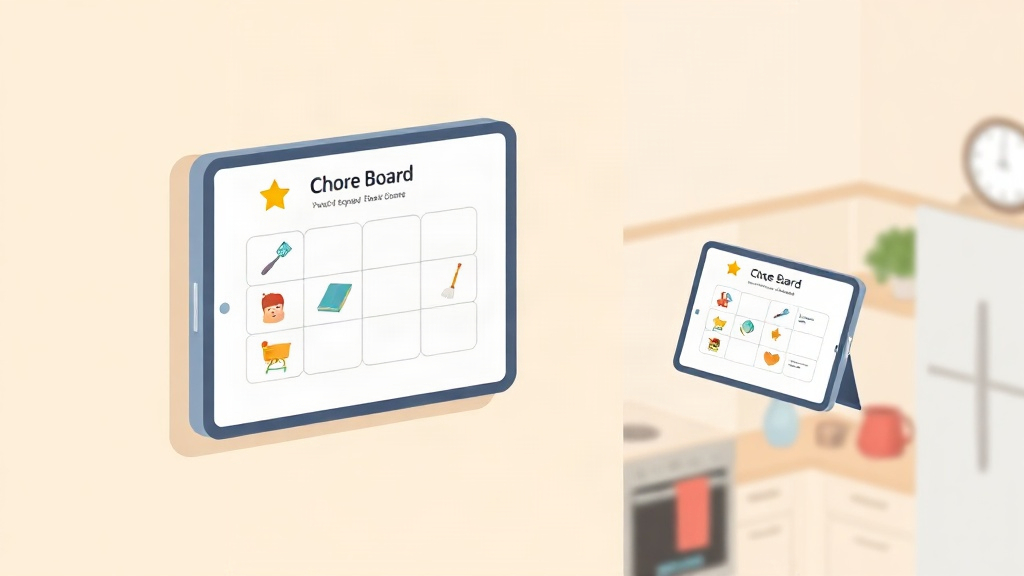
A simple progress chart or task tracker can help make that progress visible.
The idea isn't to turn every activity into a competition or attach a reward to every good decision. It's to give children a way to see their own patterns and reflect on what they're learning.
For families that already use chore charts, a system like KidKarma can help organize tasks and track completions. Used thoughtfully, a tracker can support conversations about consistency and growing independence.
Just remember that a completed checklist doesn't automatically mean a child has developed a growth mindset. The conversation around the experience matters just as much as the record itself.
4. Let Children Take Pride in Progress, Not Just Perfect Results
Suppose your child has spent a week remembering to feed the family pet without being reminded.
Instead of focusing only on the final tally, talk about what changed.
"Last week, you needed reminders most days. This week, you remembered on your own. What helped?"
That question draws attention to the progress and invites your child to recognize their own role in it.
You can still celebrate accomplishments. You can still tell your child you're proud of them. You can still give rewards for agreed-upon responsibilities.
The key is to make sure children also understand what they did to get there, so success doesn't feel like something that happens to them or something that only counts when another person approves.
What If Your Child Gets Frustrated or Pushes Back?
Growth mindset parenting sounds wonderful when everyone is calm, well-rested, and willing to discuss their feelings.
Real life is not always so cooperative.
Your child may refuse a chore, throw a pencil across the room, or announce that they are the worst person in the entire world because they got one question wrong.
You don't need to turn every difficult moment into a growth mindset masterclass.
Start by responding to what's happening.
If your child is overwhelmed, help them calm down. If a task is genuinely too difficult, adjust it or offer support. If they're upset about a reasonable boundary, listen to their frustration without necessarily changing the boundary.
For example:
"I can see that you're angry because you don't want to stop playing. It's okay to be angry. We still need to put the toys away before dinner."
Once things have settled, you can talk about what happened and what might help next time.
Children learn from watching how adults respond to frustration, too. If you make a mistake, you can acknowledge it, explain what you'll try differently, and show that being wrong doesn't require pretending nothing happened.
You won't respond perfectly every time. No parent does.
And that matters, because growth mindset parenting isn't another standard you have to meet flawlessly. It's a way of approaching learning, including your own.
Common Growth Mindset Parenting Mistakes to Avoid
A good idea can become less useful when we apply it too rigidly. Here are a few things to watch out for.
Praising effort even when a child isn't making progress. If your child keeps struggling, help them identify a new strategy or get the support they need. More effort isn't always the answer.
Treating every mistake as a teaching opportunity. Children sometimes need empathy, reassurance, or a little time before they're ready to reflect. Not every disappointment needs an immediate lesson.
Avoiding praise altogether. There's nothing wrong with telling your child you're proud of them. The aim is to add specific feedback and self-reflection, not make affection conditional or withhold encouragement.
Expecting children to become persistent overnight. Children are still developing their ability to manage emotions, plan ahead, and cope with frustration. They need guidance and age-appropriate expectations.
Using a growth mindset to excuse poor behavior. Learning from mistakes includes taking responsibility for actions and repairing harm. Understanding that a child can improve doesn't mean ignoring what happened.
Most importantly, don't let the concept become another way to judge your parenting. You can encourage a growth mindset without analyzing every sentence you say to your child.
Small, consistent changes are a perfectly good place to start.
In a nutshell
Growth mindset parenting is about helping children understand that their abilities can develop, that mistakes are part of learning, and that they have ways to respond when something is difficult.
It starts with the language we use. Instead of focusing only on whether a child is smart, talented, or successful, we can talk about the strategies they tried, the progress they made, and what they might do differently next time.
We can also help children develop their own sense of accomplishment. When we ask, "What are you proud of?" or "What did you learn?", we give them opportunities to recognize their progress for themselves.
And we can carry those lessons into everyday routines, from homework to household responsibilities, by giving children opportunities to practice, make mistakes, solve problems, and become more independent.
The goal isn't to raise children who never doubt themselves or always bounce back with a smile. It's to help them understand that a difficult moment doesn't have to be the final word on what they're capable of learning.
That's a lesson worth practicing long after the chore chart has been put away.