Quick Answer: A good behavior reward system pairs specific behaviors with points or tokens that kids earn and later redeem for privileges or items, using consistent rules, clear point values, and a defined redemption process so rewards reinforce behavior instead of feeling random or bribed.
A chore and reward system needs to do more than get your kids to finish their chores. You need a simple way to track completed tasks, turn earned points into rewards, handle missed responsibilities fairly, and keep routines consistent if your kids move between two households. The goal is to build a system your kids understand and you can actually maintain without turning every chore into a negotiation.
What Counts as a Reward for Good Behaviour?
A reward for good behavior falls into one of three categories: tangible, social, or activity-based. Tangible rewards are physical items, like a toy or extra allowance. Social rewards are praise, recognition, or one-on-one time with a parent. Activity rewards are experiences, such as choosing the weekend movie or staying up 30 minutes late past their usual bed time.
Rewards for good behavior work best when they're tied to a specific, observable action rather than a vague trait. "Made the bed without being asked" is trackable; "had a good attitude" is not. Specific actions also make it possible to assign consistent point values across siblings.
Rewards for good behavior don't need to cost money. A ten-year-old might value picking tonight's dinner as much as a five-dollar toy. Mixing free and paid rewards keeps the system from turning into a shopping list.
Pro Tip: Rotate two or three activity rewards weekly so novelty doesn't wear off and kids don't fixate on one prize.
How to Reward Good Behavior Without It Backfiring
Reward good behavior by reinforcing the action right after it happens, not days later. Delayed rewards weaken the link between behavior and outcome, especially for younger children who think in short time frames.
A reward system works best when your child knows exactly what each task is worth. If brushing teeth earns five points today and twenty tomorrow because they negotiated for more, the rules lose their meaning. Set point values in advance, write them down, and stick to them. If you want to change the values, agree on the changes with the other parent first.
Bribery is different from a reward system. A bribe is offered mid-tantrum to stop a behavior in the moment; a reward for good behavior is promised in advance for a behavior defined ahead of time. According to HealthyChildren.org, positive reinforcement works best when it's specific, immediate, and consistent, not improvised in the heat of a conflict.
Research Highlight: HealthyChildren.org notes that praise paired with a concrete reward reinforces behavior more reliably than praise alone, because it gives the child a clear, repeatable target.
Setting Up a Reward System Step by Step
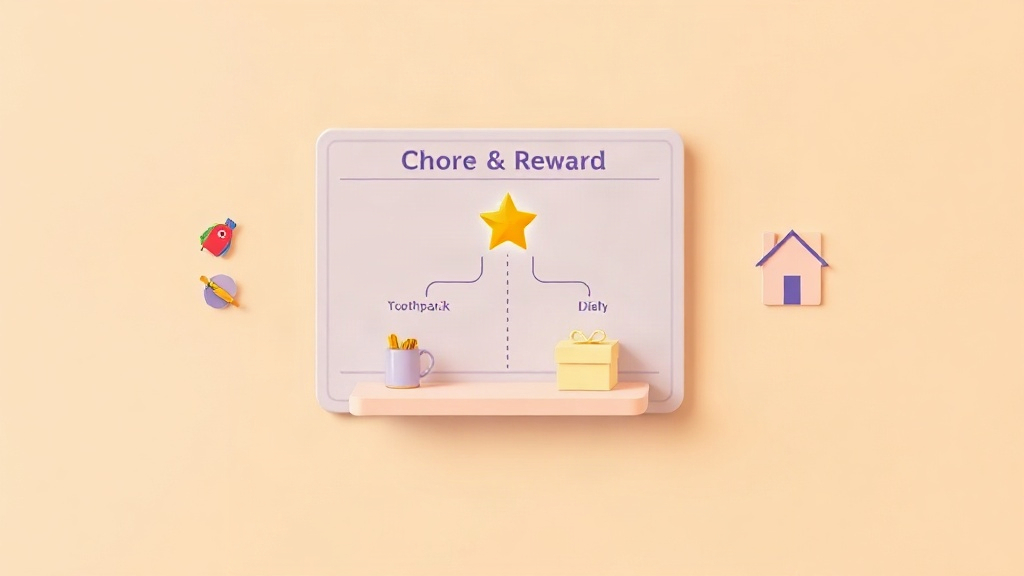
Rewarding for good behavior works as a system, not a one-off gesture. Setting it up takes four decisions made before the first point is ever earned:
- List the behaviors. Pick 5 to 8 specific actions per child, matched to their age.
- Assign point values. Harder or less-liked tasks get more points than quick, easy ones.
- Set a redemption menu. Decide what points buy, whether that's screen time, cash, or an outing.
- Define the exchange rate. State clearly how many points equal one reward, so there's no renegotiation later.
Rewarding good behavior loses credibility fast if the rules shift after the fact. If a child earns 10 points for a chore one week and 15 the next with no explanation, the system stops feeling fair.
Rewarding good behavior also needs a gentle consequence for missed tasks, not just an absence of reward. A small point deduction for an unfinished chore, clearly set in advance, keeps the system balanced without turning into punishment. For a deeper walkthrough of this balance, see this guide to rewarding good behavior in kids.
Chart Vs. Points Vs. App: Which Format Fits Your Family?
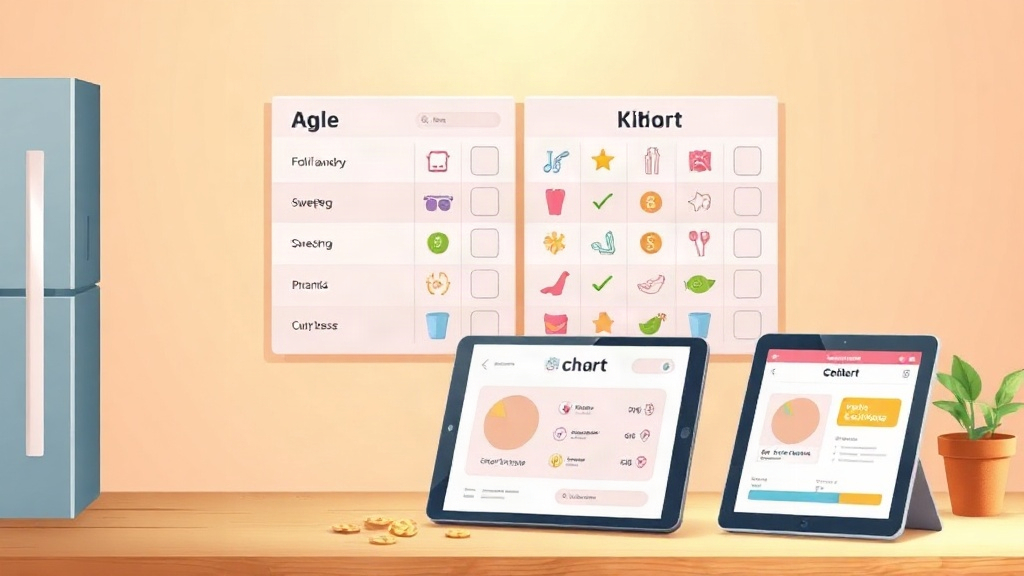
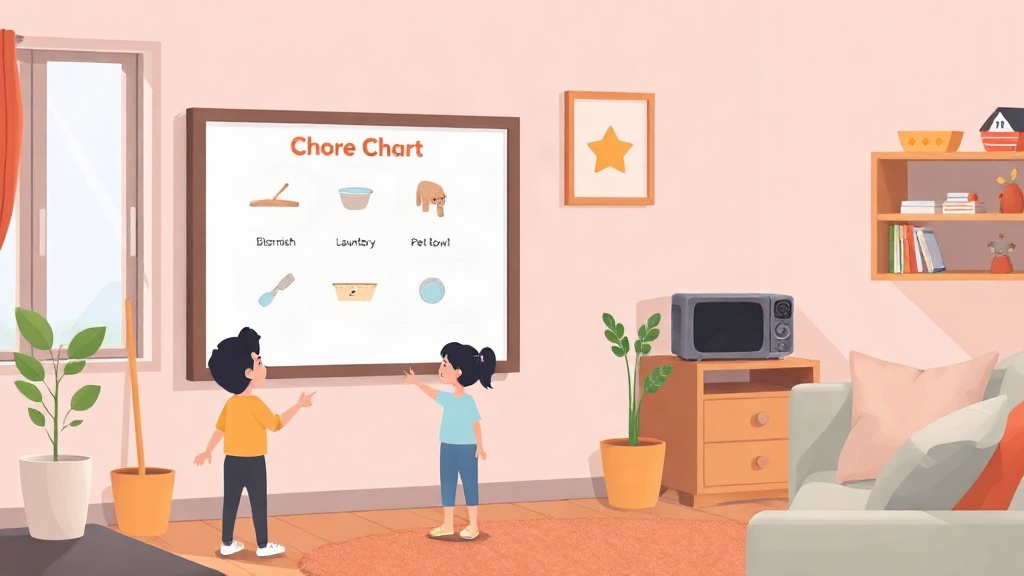
The right format depends on your child's age, how many kids you're tracking, and whether two households are involved. A good behavior reward chart works well for one or two young children in a single home, but it gets harder to maintain as the number of behaviors or kids grows.
| Format | Best for | Tracking effort | Two-home use |
|---|---|---|---|
| Paper chart | Ages 3-7, one household | Manual, daily updates | Hard to sync |
| Points jar or tokens | Ages 5-10, simple point systems | Manual, physical tokens | Requires duplicate jars |
| App-based tracking | Ages 3-16, multiple kids or households | Automatic logging | Built for syncing |
A good behavior reward chart is easy to start with, but it has no memory. Once a sticker is placed, there's no record of which week had more missed chores than the last. Apps that log activity history solve that by keeping a running record automatically.
Reward Ideas by Age
Good behavior rewards should scale with what a child actually values, which changes significantly between age 3 and age 16.
- Ages 3-5: stickers, extra story time, choosing a snack.
- Ages 6-9: small toys, a friend sleepover, picking a family activity. See more ideas in chores and rewards for 9 year olds.
- Ages 10-13: later bedtime, a hangout with friends, a small cash reward. Related: chores for 13 year olds and chores for 14 year olds.
- Ages 14-16: driving privileges, a larger cash reward, more independence on weekends.
Good behavior rewards at the teen end work differently than at the toddler end: teens respond more to autonomy and trust than to small objects. A full breakdown of this shift lives in the teenager reward system guide.
Two Homes, One System: Rewards When Co-Parenting
Keeping one set of rules across two households is the part most reward-system guides skip entirely. If chores earn 10 points at mom's house but 20 at dad's, kids quickly learn to hold out for the better deal, and the system stops reinforcing consistent behavior.
The fix is agreeing on one shared list of behaviors and point values before either household starts tracking, then keeping both sides updated on the same record. A handoff day, like a Friday custody swap, is the most common point where tracking breaks down if both parents are relying on separate paper charts.
Watch Out: A reward balance that resets every time a child switches homes teaches them the rules don't really apply consistently, which undermines the whole system faster than any single missed chore.
Shared, synced tracking removes the guesswork, since both parents see the same point balance and history regardless of which house a child is in that week.
Start by agreeing on one shared list of behaviors and point values with your co-parent before setting anything else up; see this guide to reward systems that actually work for a full setup walkthrough.