The Teenager Reward System Parents Actually Stick With
Quick Answer: A teenager reward system is a structured way to connect chores, responsibilities, or behavior to privileges, experiences, or points a teen chooses to redeem. The strongest systems give teens autonomy, transparent point values, and consistent rules across both homes if parents are co-parenting.
By a Kidkarma parent-product writer, covering reward systems for families managing chores across ages 3-16
Most reward systems fail with teenagers for mostly one reason: they were designed for a 7-year-old and never updated. A workable reward system for teens treats them as near-adults who want choice, not kids who want stickers.
What Parents of Teens Must Check Before Buying Any Reward System
Teens need autonomy and buy-in, not a sticker chart built for a child half their age. Before adopting any system, check that it lets your teen choose their own rewards and see their point balance without asking you.
A reward system for teens should separate earned privileges from basic household responsibilities. Making a bed or clearing a plate shouldn't earn points; it's baseline participation, not a bonus task.
If you co-parent, confirm the system supports a two-home setup. A reward system that only works at one house falls apart within a week when rules reset at the other.
The point economy also needs to be transparent. Teens should always see how points are earned, what they're worth, and whether they expire.
Buying Tip: Run a 3-question filter before downloading any app: Does my teen help set the rewards? Can both homes see the same points? Are penalties private and proportional?
Ask how the system handles missed chores. Gentle penalties and natural consequences work; public shaming or locked accounts tend to backfire with adolescents. The hub guide to reward systems that work covers this filtering process for all age groups.
The Four Reward System Models and Who Each One Actually Fits
The four common models are points-and-marketplace apps, paper or whiteboard charts, allowance-linked chore systems, and privilege-based systems tied to curfew or car keys. Each fits a different family.
| Model | Best For | Watch Out For |
|---|---|---|
| Points-and-marketplace apps | Busy parents wanting automated tracking and a browsable reward catalog | Subscription creep; interfaces that feel babyish to older teens |
| Paper chart or whiteboard | Families easing in with no cost | Parent becomes the nagging scorekeeper by week three |
| Allowance-linked chores | Teens already money-motivated | Paying for every basic contribution weakens intrinsic motivation |
| Privilege-based (curfew, keys, Wi-Fi) | High schoolers who value freedom over cash | Over-restriction turns every privilege into a bargaining chip |
Points-and-marketplace apps work best when they include QR code login and a reward catalog the teen can browse independently. Paper charts cost nothing but require constant manual updates. Allowance-linked systems can work well for teens who respond to money, but paying for every chore risks teaching that nothing happens for free. Privilege-based systems suit teens who care more about independence than items.
How to Set Fair Point Values Without Turning Home Into a Job
Fair point values are anchored to effort and reliability, not outcomes. Give 10 points for unloading the dishwasher once and 25 points for a full week of unasked-for pet care, so consistency is rewarded more than a single task.
Keep a short list of non-negotiable family contributions, like making your bed or clearing your plate, outside the point system entirely. These aren't rewardable; they're baseline expectations.
Publish the exchange rate once and hold to it. If 100 points equals a movie night, don't quietly raise the price once your teen starts earning fast; that's the fastest way to make a system feel rigged.
Budget Insight: Costs vary by model. Paper charts can be free, allowance-linked systems depend on what the family chooses to pay, and reward apps may have a monthly subscription. Factor in the hidden cost of parent time spent manually tracking points.
A reward marketplace approach, where teens can save points for bigger items or cash out early for smaller ones, gives them the choice that keeps a reward system for teens alive past the first few weeks.
Why Teen Reward Systems Lose Momentum
Teen reward systems can lose momentum when the parent becomes the only person tracking points. Once a busy week hits, nobody updates the chart and the whole system quietly dies.
Rewards skewing too young is another common failure. Stickers, toy prizes, and cartoon interfaces read as insulting to a 14-year-old and kill buy-in fast, even if the chore list was reasonable.
Consequences that turn punitive are a third failure point. Docking points for mood or a messy room, rather than for a missed task, makes a teen feel the system is rigged against them.
Red Flag: Warning signs in any reward app or system: no teen-facing view, penalties that can't be appealed, no history log, and a rewards catalog that hasn't been updated in years.
Two households running different rules is the fourth collapse point. When a teen learns the rules differ by house, they learn to play one parent against the other, and the point economy loses all meaning.
Reward Ideas for Teens That Don't Feel Like Bribes
Reward ideas for teens work best when they're chosen by the teen, not assigned by a parent guessing at what they'd like. Experience-based rewards tend to beat physical items: concert tickets, a day trip with a friend, extra driving practice hours, or choosing the weekend dinner menu.
Privilege rewards appeal to high schoolers specifically. Consider:
- A later curfew on Fridays
- First pick of the car for the weekend
- An extra hour of Wi-Fi access
- A pass on one chore for the week
Digital rewards work well for younger teens and are fast to redeem: game currency, a streaming upgrade, or a phone case pick. Cash-adjacent rewards, like gas money or a matched contribution toward something they're saving for, tend to land best with 15- and 16-year-olds.
The common thread across every reward system for teens by age is choice. A reward marketplace with categories lets a teen pick instead of a parent guessing wrong.
Co-Parenting Across Two Homes: Keeping One Point System Consistent
Keeping one point system consistent across two homes starts with both households seeing the same points, the same reward catalog, and the same activity history. Without shared visibility, a teen keeps two sets of books and plays both sides.
Agree on a short shared rule set, three to five chores and three to five rewards, before introducing the system to your teen. Launching unified prevents early confusion about whose rules apply.
Use activity history to settle disputes like "but Mom said I could" with a timestamp instead of a memory contest. Keep the tone in any shared notes neutral; the app should function as the scorekeeper, not a channel for co-parent conflict. For families navigating this directly, see the guide on building a chore system for blended families.
How KidKarma Handles the Teen Reward System Problem
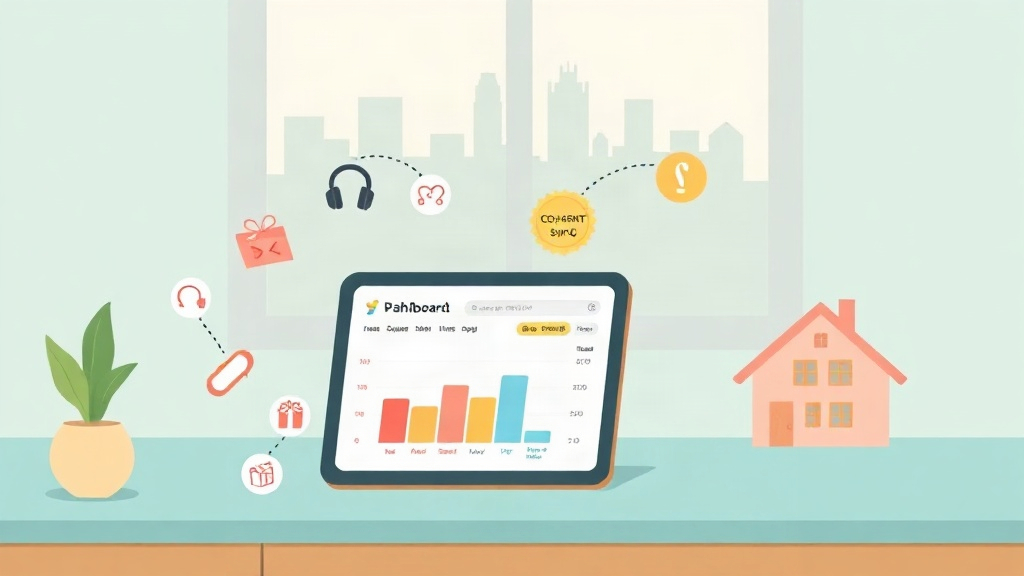
Kidkarma's smart point system gives teens their own dashboard, so they log in with a QR code and check their balance without asking a parent. That removes the "nagging scorekeeper" failure mode entirely.
The reward marketplace lets teens browse and redeem points for privileges, experiences, or items a parent has approved in advance, keeping choice with the teen and oversight with the parent.
Two-home sync is built for co-parents: both households share the same points, chores, and activity history in one account, solving the consistency problem that breaks most paper or single-house systems.
Gentle penalties and smart reminders nudge without nagging, and activity history lets parents spot patterns instead of policing daily behavior. Because the app covers ages 3 to 16, the same account can grow from a basic chore chart into a full teen-level autonomy system. See the chore systems built for teens 13 and up for age-specific setup examples.
Ready to set up a reward system your teen will actually use? Start with the full guide to reward systems that work.