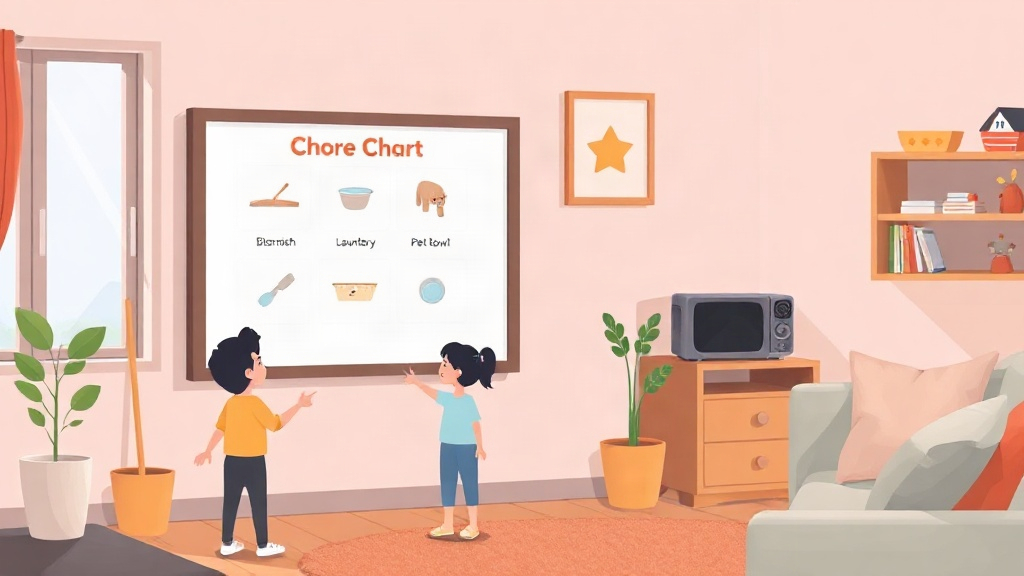
Quick Answer: Chores for 13 year olds should include full room upkeep, cooking simple meals, yard work, and babysitting younger siblings for short periods, paired with a clear pay structure and a way to track completion so the list doesn't fall apart after one week. Because getting a chore list right is one thing but getting everyone to stick to it is another.
A 13 year old can handle most household tasks an adult does, just with closer oversight on anything involving appliances, chemicals, or driving errands. At this age, chores shift from "helping" to "owning" a task from start to finish.
Quick jump:
- Chores for 10-12 Year Olds
- Chores for 15 Year Olds
- How Much Should You Pay for Chores?
- What Responsibility Looks Like for a certain age
- Alternatives to a Paper Chore Chart
Typical chores for 13 year olds include:
- Doing their own laundry, start to finish
- Cooking a simple dinner (pasta, eggs, sandwiches)
- Mowing the lawn or doing full yard cleanup
- Deep-cleaning their bathroom
- Babysitting a younger sibling for an hour or two
- Managing their own homework and school supply list
If your 13 year old is ready for more independence, the chore systems built for teens cover how to scale complexity without constant reminders. If they're still closer to tween territory, the next section covers the step just below this one.
Chores for 10-12 Year Olds
Chores for 10-12 year olds sit between simple tidying and full ownership of a task. At this stage, kids can follow multi-step instructions but still need a checklist or reminder system to finish consistently.
Good chores for 10-12-year olds include:
- Loading and unloading the dishwasher correctly
- Vacuuming common rooms
- Taking out trash and recycling on schedule
- Packing their own school lunch
- Walking or feeding a pet without reminders
- Folding and putting away their own laundry
Kids in this band respond well to a visible system, since they're old enough to want credit for finishing but not yet self-motivated without one. A checklist also means fewer rounds of "Did you do it?" from parents. The guide to getting tweens to help around the house breaks down how to introduce more chores without pushback.
Quick Reference: Chores for 10 12 Year Olds
| Chore | Frequency | Supervision Needed |
|---|---|---|
| Dishwasher loading | Daily | Minimal |
| Vacuuming | Weekly | None |
| Trash/recycling | Weekly | None |
| Packing lunch | Daily | Light check-in |
| Pet care | Daily | None |
Chores for 15 Year Olds
Chores for 15 year olds should look close to adult-level responsibility, with the main difference being judgment calls around safety and money. A 15 year old can run a full chore list independently, including tasks that affect the whole household, not just their own space.
Chores for 15 year-olds commonly include:
- Grocery shopping from a list
- Cooking a full meal for the family
- Doing yard work with power tools (with training)
- Managing their own schedule for chores and homework
- Watching younger siblings for an evening
- Basic car maintenance checks (tire pressure, oil level) if they're learning to drive
At 15, chores often connect directly to growing independence: a teen managing their own laundry, meals, and a sibling's bedtime is also practicing the planning skills that come with a driver's license or a first job. It's a lot more than keeping their room clean. They're learning to manage responsibilities that affect other people, too. For the step just before this one, see the chores for 14 year olds guide.
How Much Should You Pay for Chores?
There's no single right number for paying kids to do chores. Most families split tasks into two categories: required chores that come with no pay, tied to being part of the household, and bonus chores that pay per task or per week.
For chores for 10-year olds to earn money, a small per-task rate tends to work better than a flat allowance, since it ties pay directly to effort. Think washing the car, weeding the garden, or finally getting that garage shelf organized. For chores for 10 year-olds to earn money, common bonus tasks include car washing, weeding, or organizing a garage shelf, each with its own set rate agreed on in advance.
Reality Check: A chore chart with no pay structure attached is the single biggest reason kids stop doing chores after the first two weeks, according to parenting researchers at HealthyChildren.org, who note that chores tied to responsibility, not just reward, build longer-term follow-through.
By 13-15, many families shift from per-chore payment to a flat weekly allowance tied to a longer list of required chores, since teens are managing more tasks at once and per-task tracking gets tedious. Whichever structure you choose, write it down and keep it consistent for at least a month before changing it.
What Responsibility Looks Like by Age (10, 12, 13, 15)
Responsibility at each age should track closely with the complexity of chores a child can finish without reminders. A 10 year old is typically ready to manage single-step daily tasks: feeding a pet, making their bed, or clearing their own dishes.
A 12 year old should be able to handle multi-step tasks, like starting a load of laundry and knowing when it's time to switch it to the dryer, or following a recipe for a basic snack. A 13 year old is ready to own a task end to end, including noticing when it needs doing without being asked, such as replacing an empty paper towel roll or starting dishes after dinner without a reminder.
A 15 year old should be able to plan around competing priorities: fitting chores around school, activities, and a part-time job if they have one. The jump between each age isn't about adding more chores, it's about removing the reminder step. That's the part parents often end up managing, too. A child might know how to do the laundry perfectly well, but if someone still has to remind them every time, the task isn't quite theirs to manage yet.
Alternatives to a Paper Chore Chart
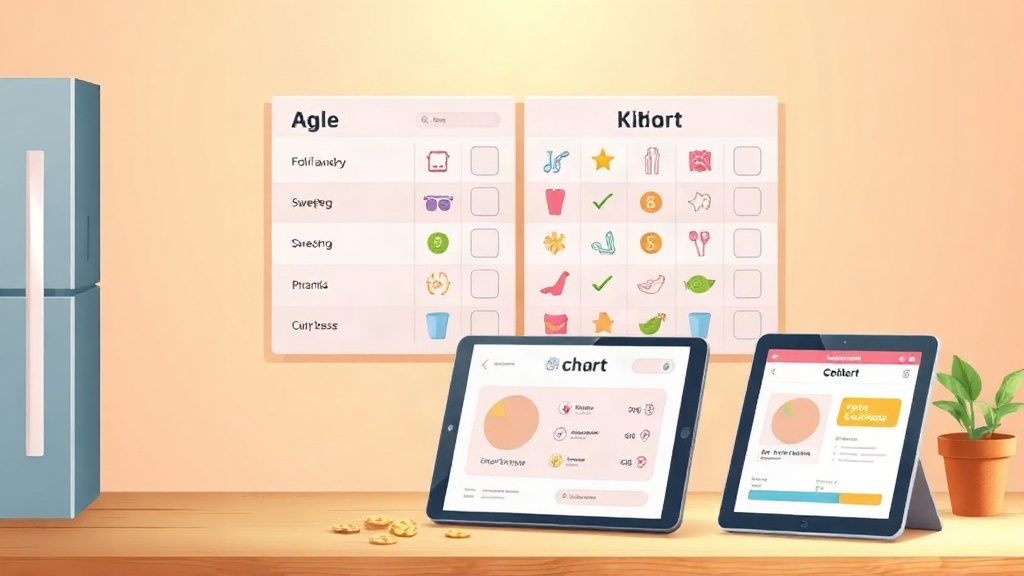
A paper chore chart lists tasks but doesn't track whether they got done, who did them, or what's owed in return. App-based tracking logs completion in real time and ties it to a reward system, which removes the guesswork of "did you actually do this?"
Static Chart vs. App-Based Tracking
| Feature | Paper Chart | App-Based Tracking |
|---|---|---|
| Tracks completion automatically | No | Yes |
| Works across two households | No | Varies by app |
| Visual progress for kids | Limited | Yes |
| Reward tied directly to tasks | Manual | Automated |
The core difference between a static chart and an app isn't the list of chores, it's whether the system tells you what happened without you asking. For co-parents splitting time between two homes, that tracking gap matters more, since a paper chart in one house has no record of what happened in the other. Otherwise, the same chore can turn into two different versions of events, depending on which parent you ask.
Why Kidkarma Fits Families Managing This Across Two Homes
Kidkarma is built for parents and co-parents managing chores for kids ages 3 to 16, with a point system, reward marketplace, and activity history that logs what got done and when. For families splitting time between two households, two-home sync keeps chore records consistent no matter which parent's house a child is at that week.
Start by setting up the age-appropriate chore list from this guide, then use Kidkarma's guide to 11 year olds' chores to fine-tune the list as your child moves between age bands.
That way, parents don't have to rely on a child's memory, or a last-minute text asking whether the chores were done at the other house.
Start by setting up the age-appropriate chore list from this guide, then use Kidkarma's guide to 11 year olds' chores to fine-tune the list as your child moves between age bands.