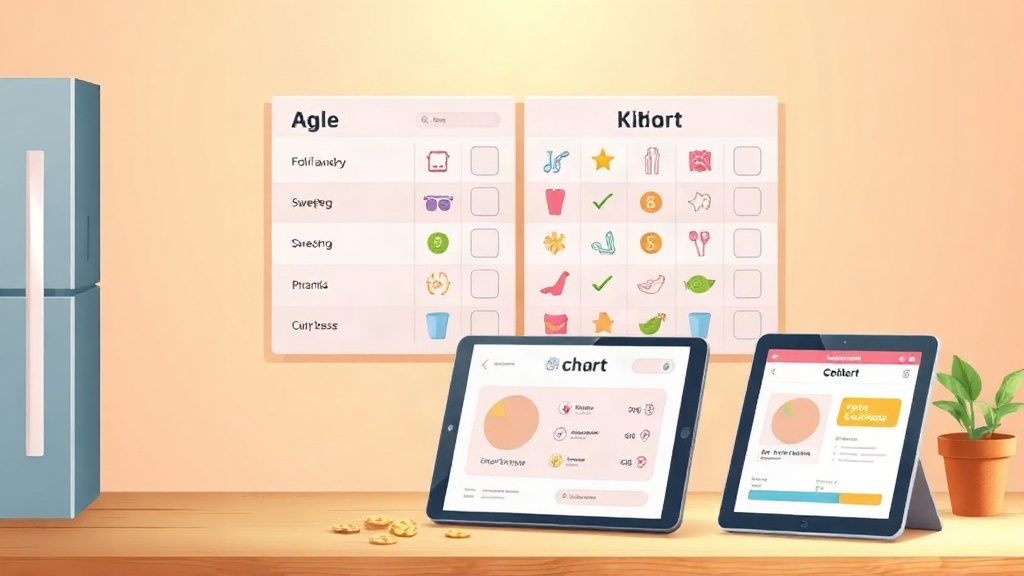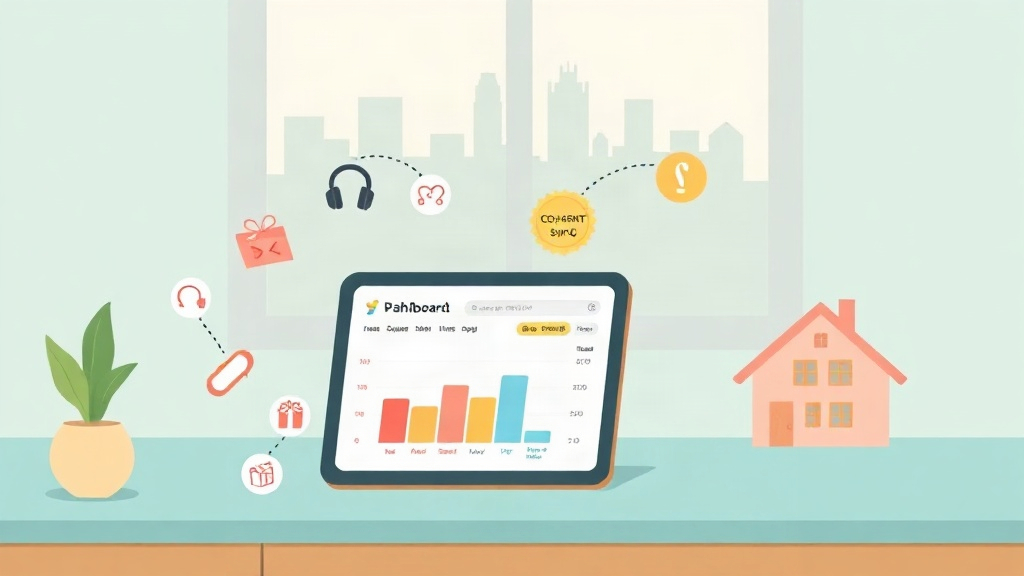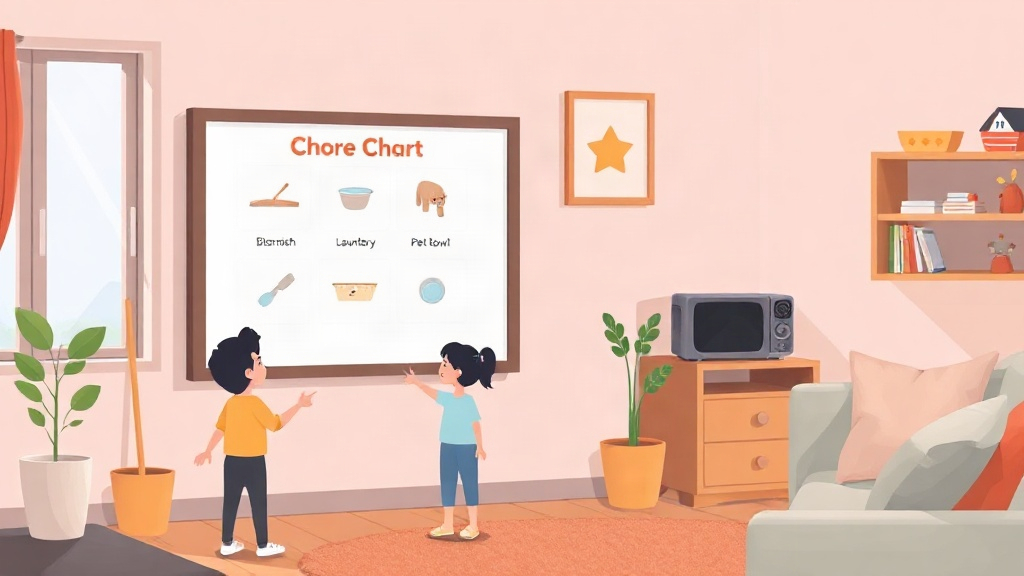
Quick Answer: The best chore chart pairs clear tasks with a point system that turns completed chores into redeemable rewards instantly, not just a weekly checkbox. Digital point-based charts outperform paper ones for motivation, especially for younger kids, ADHD households, and families splitting time between two homes.
What Makes a Chore Chart Actually Work
A chore chart works when a child can see, at any moment, exactly what they owe and what they'll get back for it. Paper charts rely on stickers or checkmarks that fade in meaning after a week; a child forgets why five stars mattered by the time Saturday's reward conversation happens.
A point-based system keeps that connection alive. Each task has a defined point value, points accumulate in a visible running total, and a reward sits at a specific point threshold the child can track. This structure matters most for younger kids and kids who struggle with delayed gratification, because the gap between effort and payoff stays short and visible.
Paper charts still work for simple, short-term routines. But once a family wants history, multiple kids, or rewards beyond stickers, a digital point system becomes the more practical tool.
How a Point-Based Chore Chart Works
A chore chart with a point system runs on a simple loop: a task is assigned, the child completes it, points are logged, and the point balance updates. Parents set the point value per task, so a five-minute job like making a bed might be worth less than a 20-minute job like vacuuming the living room.
The point system chore chart earns its name at the redemption step. Once a child's balance hits a set number, they trade points for a reward from a list the parent built, whether that's screen time, a small toy, or a family outing. This is where a reward marketplace style feature matters: it gives kids a menu of options instead of one fixed prize, which keeps motivation from stalling once a child loses interest in a single reward.
Gentle penalties can subtract points for skipped or incomplete chores, but the better systems apply this sparingly and transparently so the chart stays motivating rather than punitive.
For a full walkthrough of setting one up at home, see this step-by-step point system setup guide.
Comparing Point-System Chore Charts
A chore chart point system is only as good as the parts a parent can actually compare before choosing one. The table below lines up the features that matter most when evaluating a digital chore chart against a paper one or a generic task list app.
| Feature | Paper Chart | Basic Task App | Point-System Chore App |
|---|---|---|---|
| Task assignment | Manual, rewritten weekly | Digital list, no values | Digital list with point values per task |
| Rewards | Sticker or verbal praise | Often none | Redeemable reward list tied to points |
| Penalties | Rare, inconsistent | Rare | Gentle point deductions, clearly logged |
| Multi-home support | Not possible | Rarely built in | Sync across two households |
| Kid login | None | Shared parent login | Separate kid login, often QR-based |
Most chore chart content online is a printable template or a general listicle, and none of it lays out this kind of side-by-side comparison. That gap is exactly why families comparing a point-based system to a paper chart end up guessing instead of deciding with actual criteria in front of them.
Buying Tip: Prioritize apps that separate kid logins from parent logins (QR code or PIN-based) so children can check their own point balance without using a parent's phone.
Chore Charts for Kids With ADHD
Chore charts for kids with ADHD need to lean on immediate feedback rather than long delays between effort and reward. The "10-and-3 rule" commonly referenced for ADHD task management suggests working in short 10-minute bursts followed by a 3-minute break, a structure that maps naturally onto point systems where each short task logs points right away.
ADHD triggers that make chores harder include unclear instructions, long multi-step lists without breaks, sudden transitions, and tasks with no visible end point. A chore chart that breaks a job like "clean your room" into smaller logged steps (put away clothes, clear the desk, make the bed) avoids several of these triggers at once.
The best chore chart app for ADHD kids is one that turns chores into short, clear steps with instant point feedback rather than a single big weekly reward. Visual task breakdowns, kid-friendly interfaces, and smart reminders all support this better than a static chart that only gets reviewed once a week.
Expert Advice: Keep ADHD task lists to three or fewer steps per chore card; longer lists increase the chance a child abandons the task midway.
See a deeper comparison in this ADHD chore app guide.
Chore Ideas by Age
Good chores for a 10-year-old typically involve multi-step tasks done independently. At this age, kids can usually manage loading and unloading the dishwasher, taking out trash and recycling, tidying their room and making their bed, sorting laundry, and feeding pets.
The key at age 10 is pairing each chore with a visible point or progress tracker so the task feels like it counts toward something, rather than being open-ended busywork. A progress chart that shows weekly completion rates reinforces this better than a checklist that resets without a visible record.
Age ranges to keep in mind when assigning tasks:
- Ages 3-5: putting away toys, wiping small spills
- Ages 6-9: setting the table, simple pet care, making the bed
- Ages 10-12: dishwasher duty, trash and recycling, laundry sorting
- Ages 13-16: cooking simple meals, yard work, managing their own laundry cycle
For a complete breakdown by age, see this age-appropriate chores guide.
Co-Parents and Two-Home Households
Chore charts for co-parenting households need to stay consistent across two separate homes, not reset every time a child switches residences. A two-home sync feature keeps a single running point total visible to both parents, regardless of which house the child is staying in that week.
This consistency matters because kids in split households can otherwise end up with two different sets of rules and two different reward systems, which undermines the motivation a point system is built to create. Keeping one shared point balance avoids that split entirely.
Worth Knowing: Co-parenting chore systems work best when both households agree on the same point values for shared tasks before setup, not after disagreements start.
Read more in this co-parenting chore chart guide.
Kidkarma brings task management, a smart point system, a reward marketplace, gentle penalties, QR code kid login, and two-home sync together in one app built around these exact needs. Compare the full feature set on the chore and allowance app comparison page.