Quick Answer
The best chore apps for kids with ADHD combine short, single-step tasks, visual cues, and immediate rewards that appear within seconds of completing a task. Apps like KidKarma, Joon, S'moresUp, and Homey help children stay motivated by pairing visual progress with instant parent approval instead of delayed weekly rewards. The best choice depends on your family's routine, but consistent feedback and simple task management matter more than the number of features.
What Is a Chore App for Kids with ADHD?
A chore app for kids with ADHD is a digital task-and-reward system built around short tasks, visual cues, and near-instant reinforcement - designed around executive function limits rather than around willpower or memory.
Key Takeaways
- ADHD-friendly chore apps work best when rewards are immediate and tasks are broken into simple steps.
- Visual checklists and short task lists reduce overwhelm and improve consistency.
- Parent approval and positive reinforcement are more effective than delayed rewards.
- Shared task management helps co-parents maintain consistent expectations.
- The best app is the one your family can use consistently, not the one with the most features.
What Makes a Chore App Actually Work for ADHD Kids?
A chore app works for ADHD kids when it shortens the gap between finishing a task and feeling rewarded for it. Long checklists and delayed allowance payouts rely on working memory and patience - two things ADHD brains manage differently.
ADHD is common enough that most classrooms include several affected kids: roughly 7 million U.S. children currently have a diagnosis, according to CDC national survey data (2025). An app built around that reality - not around a neurotypical child's attention span - tends to hold up better past week one, and age-appropriate chore guides can help you calibrate task difficulty before you even open an app.
What Should You Look for in a Chore App for a Child with ADHD?
Look for an app that keeps tasks visible, simple, and immediately rewarding. The fewer taps between completing a chore and seeing points appear, the more likely the habit sticks.
- Single-step tasks with icons, not paragraph-long instructions
- Instant point credit once a parent approves the task
- Short, visible task lists - three to five items at a time, not ten
- Reminders that nudge once, not repeated alerts that feel like nagging
- A reward menu the child helped choose, not one a parent assigned alone
Buying Tip: Test the 14-day free trial. If your child can navigate the task list without help within two tries, the interface is simple enough for an ADHD household. KidKarma was built around that exact test.
Best Chore Apps for Kids with ADHD Compared
Every family has different needs, especially when managing ADHD routines. The table below compares popular chore apps based on the features that matter most for helping children stay focused, motivated, and consistent with daily chores.
| App | Price (2026) | How it motivates | Best For |
|---|---|---|---|
| KidKarma | $4.99/mo or $29.99/yr after a 14-day free trial | Points approved with one tap, spent on rewards your child helped pick | Short daily chore lists, ages 2+, two homes |
| Joon | Free tier; Premium $12.99/mo | A game: kids care for a virtual pet by finishing real tasks | Ages 6-12 who love video games |
| S'moresUp | Free core; Premium $9.99/mo or $99.99/yr | Points plus allowance, with screen time controls | Busy families with several kids |
| Homey | See the App Store listing | Allowance and savings goals | Kids motivated by money |
KidKarma keeps the list short and the reward fast: a child ticks off a chore, you approve with one tap, and the points show up right away. Joon turns tasks into a game, which can hook kids who ignore a plain checklist, though it costs more and is designed for ages 6 to 12. S'moresUp suits families who also want screen time controls. Homey works for kids who care more about money than points.
Families weighing several tools at once can compare family chore apps side by side before committing to a paid plan.
How to Choose the Right Chore App for Your Child
Choose a chore app based on how your child responds to routines rather than the number of available features. For children with ADHD, simple task lists, immediate rewards, and clear visual progress are usually more effective than complex gamification or extensive customization.
ADHD-Friendly Chores by Age
Pick chores that have one clear finish line and take 5 to 10 minutes. Break anything bigger into single steps, each with its own checkbox.
| Age | ADHD-friendly chores |
|---|---|
| 4-6 | Put toys in one bin, feed the pet (one scoop), put shoes by the door |
| 7-9 | Set the table, empty small trash cans, pack the backpack from a checklist |
| 10-12 | Load the dishwasher, fold and put away their own laundry, wipe the bathroom sink |
| 13+ | Cook a simple meal, run a load of laundry, take the bins out on trash day |
For more ideas at each stage, see our age-appropriate chores guide.
How to Set Up a Chore App for a Child with ADHD
- Start with two chores. Add more only once those two happen without reminders.
- Make each task one step. "Clean your room" becomes "Put clothes in the hamper."
- Let your child pick the rewards. A reward they chose is worth working for.
- Approve right away. Tap approve as soon as the chore is done, not at bedtime.
- Keep the same list for a few weeks. Predictability matters more than variety.
How Does Visual Structure Help ADHD Kids Complete Chores?
Visual structure works because it replaces a memory demand with a perception demand. A child doesn't have to recall what's next - they just have to look.
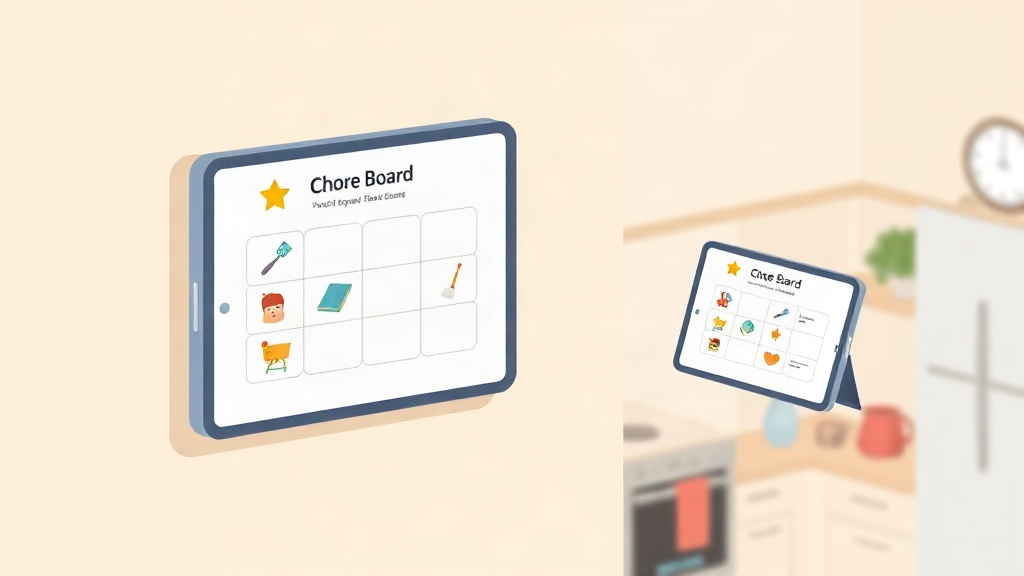
Color-coded task cards, progress bars, and icon-based checklists all do this same job in different packaging. The format matters less than whether the child can tell, at a glance, what's done and what's left.
"My son couldn't hold a five-step morning routine in his head, but he could look at four colored cards and know exactly where he was. That's the whole difference between a chore chart that works and one that gets ignored."
Do Reward Points Actually Work for ADHD Motivation?
Yes, when the points are awarded immediately and tied to a reward the child chose. ADHD motivation research points to timing, not size, as the variable that matters most.
A token-economy behavior program produced an effect size of 0.74 across problem-behavior categories, per a Frontiers in Psychiatry study (2015) - a result researchers describe as clinically meaningful, not marginal. Apps that build on that positive-reinforcement research tend to outperform plain sticker charts over time.
Worth Paying Extra For: If a paid tier adds instant push-notification approval instead of end-of-day batch approval, it's usually worth the upgrade for an ADHD household - the delay is what breaks the habit loop, not the price.
How Should Co-Parents Handle a Chore App for an ADHD Kid?
Co-parents should use one shared app and one shared rule set, not two separate systems across two homes. Inconsistent expectations are especially hard for ADHD kids to track.
A shared dashboard where both parents see the same tasks and approve the same way removes the “I didn't know” gap that otherwise resets a child's progress every time they change households. Brands like KidKarma build this shared view specifically because chore consistency, not chore volume, is what builds the habit.
What Mistakes Should You Avoid When Using a Chore App with an ADHD Child?
The most common mistake is assigning too many tasks at once, which recreates the overwhelm the app was supposed to fix. The second is switching reward systems too often before either the app or the child has time to adjust.
- Loading five or more tasks onto the list on day one
- Changing the reward menu weekly instead of letting the child save toward one goal
- Approving tasks in a batch at night instead of as they're completed
- Using the app as a punishment tool by deducting points for unrelated behavior
Expert Advice: The families who stick with a chore app past the first month almost always started with one or two tasks, not a full routine. Build the habit first, then add tasks - never the other way around. - Bhagyesh, creator of KidKarma
Parents dealing with active resistance rather than disorganization may find more direct help in strategies for when kids won't do chores, which addresses pushback separately from task structure.