Paying kids for chores can teach money management and boost follow-through, but it also risks entitlement, inconsistent enforcement, and kids refusing to help unless there's a payout. The right answer usually isn't "pay for everything" or "never pay for anything" — it's knowing which chores belong in each category and having a system consistent enough to hold the line.
By the KidKarma Editorial Team — parents and co-parents who build, test, and troubleshoot real household chore systems every day, including across two-household families.
The Cons of Paying for Chores
The biggest downside of paying kids for chores is that it can quietly shift their mindset from "I help because I'm part of this family" to "what do I get for this?" That shift shows up in a few predictable ways.
- Entitlement creep. Once a child expects payment for loading the dishwasher, they can start expecting payment — or at least negotiation — for everything, including things that were never up for debate before, like picking up their own backpack.
- Refusal of unpaid help. Kids who are used to a price tag on tasks sometimes flatly refuse to help with something "extra," like carrying in groceries or helping a sibling, because it wasn't part of the paid list.
- Escalation and burnout. The reward that motivated a 7-year-old in January often stops working by April. Parents end up raising the payout just to get the same level of cooperation, which isn't sustainable.
- Collapse without the incentive. Remove the payment and the chore often stops entirely, because the behavior was never tied to habit or identity — just the transaction.
- Inconsistent enforcement, especially across two households. This is the con nobody talks about enough. When co-parents run separate systems — one house pays for chores, the other doesn't, or the rates and rules differ — kids quickly learn to play one parent's system against the other's. Consistency, not the amount of money, is usually what breaks down first.
None of this means paid chores are a bad idea. It means paid systems need guardrails, which we'll get into below.
What Is Pros and Cons of Getting Paid for Chores?
The "pros and cons of getting paid for chores" debate is really a conversation about two competing philosophies: chores as family contribution (unpaid, expected, part of being a household member) versus chores as paid labor (a transaction where effort is exchanged for money). Most families end up somewhere in between.
On the pro side, research consistently links childhood chore participation — paid or unpaid — to stronger long-term outcomes. Studies following kids into adulthood have found that those who did regular household chores had stronger adult relationships, were more successful professionally, reported higher life satisfaction, were more likely to volunteer, and managed money better as adults. The common thread across all of those outcomes is discipline, empathy, and follow-through — skills that chores build daily, regardless of whether money changes hands.
On the con side, the concern is that attaching a price to every task teaches kids that helping is optional unless compensated — the opposite of the contribution mindset the research points to. Sites like happilyfamily.com, moneyprodigy.com, and greenlight.com all wrestle with this same tension, and most land on a hybrid approach rather than an all-or-nothing rule.
How Pros and Cons of Getting Paid for Chores Works
In practice, paid-chore systems work by separating tasks into two tiers: baseline family contributions (unpaid, expected simply because you live here) and bonus tasks (paid, usually bigger or optional jobs beyond the baseline). Families that skip this split tend to run into the entitlement and inconsistency problems described above, because every task gets treated as a negotiation.
A workable system usually follows a simple structure:
- Define the tasks. List every chore expected of each child, specifically. "Clean your room" is vague; "make bed, pick up floor, put clothes in hamper" is clear and checkable.
- Assign point or dollar values. Quick daily tasks get a small value, medium tasks a bit more, and weekly or bigger jobs the highest value.
- Set reward tiers. Kids know upfront what a set number of points or dollars gets them — extra screen time, choosing dinner, a small outing, or a bigger reward for sustained effort.
- Let kids help choose the rewards. The reward you assume is motivating and the one your child actually wants are often different things.
- Review the system monthly. What worked for a 6-year-old often stops working for the same kid at 8. Chores and rewards should scale with age and attention span.
Here's how the two tiers typically compare side by side:
| Unpaid (Family Contribution) | Paid (Bonus Tasks) | |
|---|---|---|
| Examples | Making bed, clearing own plate, tidying toys, feeding a pet | Washing the car, deep-cleaning a room, yard work, babysitting a sibling |
| Purpose | Builds identity as a contributing family member | Teaches earning, budgeting, and effort-to-reward connection |
| Risk if overused | Kids may feel chores are just orders, with no ownership | Entitlement, refusal of unpaid help, constant negotiation |
| Best for | Daily habits, all ages | Occasional or bigger tasks, especially ages 8+ |
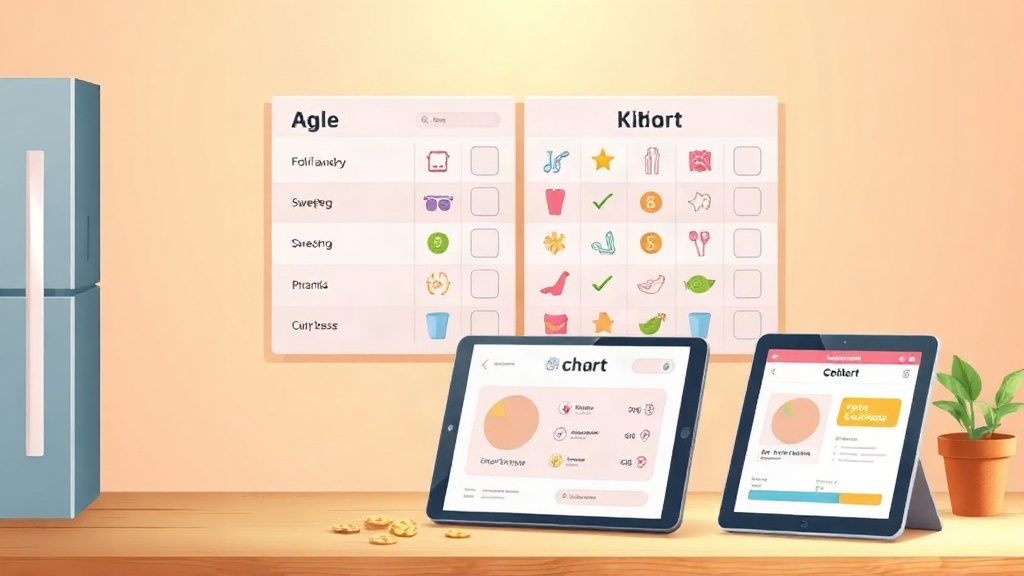
Tools that manage this split consistently — tracking which tasks are paid, which are unpaid, and syncing the rules across both parents — tend to hold up better over time than a chart taped to the fridge. This is exactly the gap KidKarma was built to close, with chore management, task scheduling, a point-based reward system, progress tracking, and co-parent sync so both households run the same rules.
Best Practices
A few habits separate paid-chore systems that last from the ones that fizzle out after a few weeks:
- Start small. One or two chores at a time, expanded gradually. Overloading a kid with a long list backfires fast.
- Be consistent. Same chores, same expectations, same schedule. Consistency builds the habit faster than any reward does.
- Acknowledge effort, not just completion. "I noticed you put your shoes away without being asked" carries more weight long-term than a sticker.
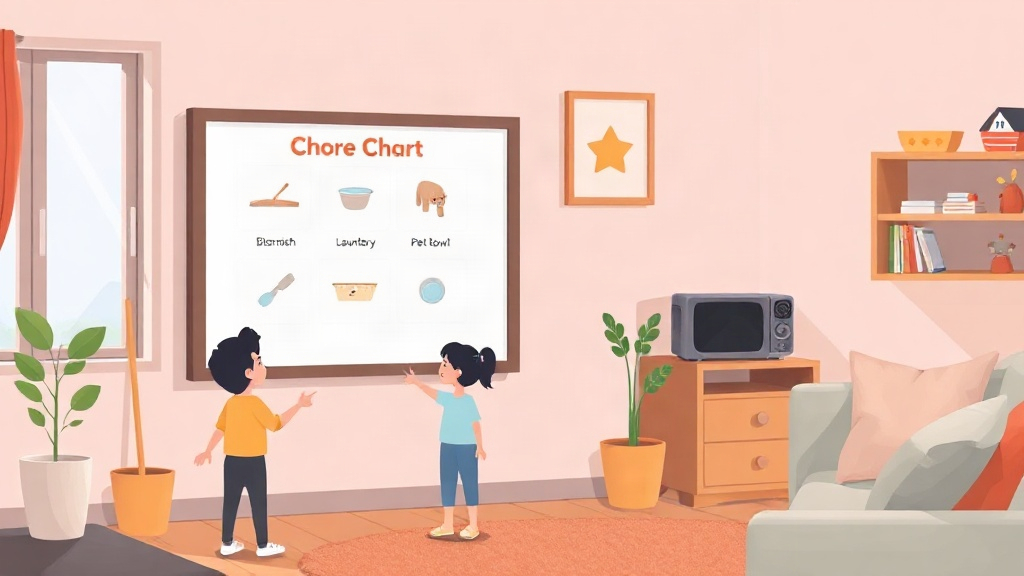
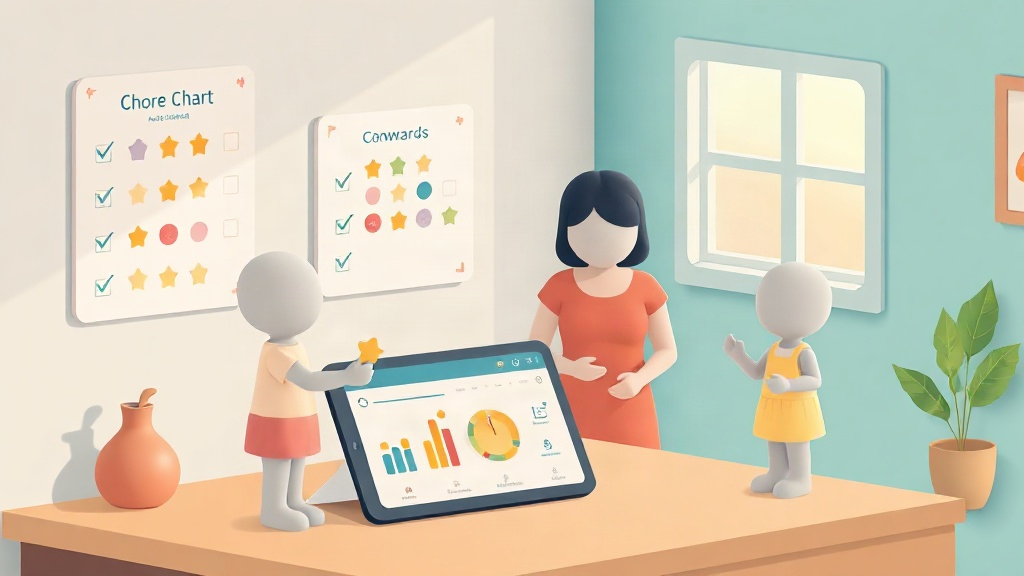
- Make it visual. A chore chart — physical or digital — helps kids see what's expected without constant reminders. KidKarma's dashboard gives kids ownership of their own task list.
- Don't pay for everything. Keep some chores as unpaid family contribution. Not every act of helpfulness needs a dollar sign attached, or the lesson gets lost.
- Model it yourself. Kids learn character by watching a parent help a neighbor or do their own chores cheerfully, not by being told to.
- Sync the rules across households. If co-parents run different systems, agree on which chores are paid, at what rate, and how progress is tracked, so the rules don't change depending on which house a kid is in.
For more on troubleshooting a stalled system, see Kids Won't Do Chores? 7 Strategies That Actually Work and Reward Systems for Kids That Actually Work.
Should You Get Paid for Doing Chores?
There's no single right answer, but the research leans toward a hybrid model. Kids who did regular household chores growing up — paid or not — showed stronger adult outcomes across relationships, career success, and money management. That suggests the doing matters more than the paying. A reasonable approach: keep baseline household tasks unpaid and expected, and reserve payment for bigger, optional jobs. That way kids still build the habit of contributing without learning that help only happens with a payout attached.
Is It a Good Idea to Pay Kids for Chores?
It can be, as long as it's not the only mechanism at play. Paying for chores works best when it's layered on top of an existing expectation that kids contribute to the household simply because they're part of it. Age matters too — younger kids (ages 2–5) generally respond better to praise, visible progress, and a sense of contribution than to money, which is a fairly abstract concept for them. Older kids (8 and up) tend to understand and respond to earning structures more meaningfully. Research on parental "scaffolding" — guiding a child through a task at first, then stepping back as they gain confidence — also shows that chores support real problem-solving skill development, especially when the process is treated as valuable, not just the finished result.
How Much Should a Child Get Paid for Chores?
There's no universal dollar figure, and be cautious of any source that gives you one with certainty — pay expectations vary widely by family budget, cost of living, and household norms. What matters more than the exact amount is having a structure kids can predict. A point-based system tends to be more flexible than fixed dollar amounts because it scales with age and effort without requiring constant renegotiation:
- Quick daily tasks: low point value
- Medium tasks (a room, laundry folding): moderate point value
- Weekly or bigger jobs (yard work, deep cleaning): highest point value
Points then convert into tiered rewards — a small tier for extra screen time or choosing dinner, a mid-tier for a small outing or toy, and a top tier for something bigger a child is saving toward. This structure also makes it easier to keep the paid/unpaid split clear, since baseline chores simply don't carry point value at all. KidKarma's point system automates this calculation so the reward tiers stay consistent even as the task list grows.
What Is the Most Disliked Chore?
Across most households, cleaning the bathroom, washing dishes, and tidying a bedroom consistently rank as the most disliked chores — they're repetitive, not visually rewarding for long, and easy to put off. The hardest chores tend to be the ones with multiple steps and no clear "finished" point, like organizing a closet or deep-cleaning a kitchen, because kids (and adults) struggle to know when to stop. The fix isn't avoiding these chores — it's rotating them so no one child is always stuck with the least popular job, breaking multi-step chores into smaller checkable pieces, and using a visible tracker so progress on a long task doesn't feel invisible.
If you're ready to put a consistent paid/unpaid chore system in place — one that stays the same across both households — KidKarma handles the tracking, scheduling, rewards, and co-parent sync so the rules don't reset every time your kid changes houses.