Written by Maya Chen, parent of two and content lead at KidKarma, where she spends her days researching chore and reward habits alongside real families.
Kids repeat what gets noticed. When a child hears "thank you for putting your shoes away" instead of just a reminder to do it, that small moment of recognition shapes what happens tomorrow. Rewarding good behaviour is not about bribery or spoiling a child - it's about giving consistent, meaningful feedback that helps habits stick. This guide breaks down what the term actually means, the psychology behind it, and how to apply it at home without the common pitfalls.
What Is Reward Good Behaviour?
Rewarding good behaviour means responding to a desired action - like finishing homework, sharing a toy, or completing a chore - with something that makes the child more likely to repeat it. This can be a word of praise, extra privilege, or a small token. The goal of reward for good behaviour is not control, but reinforcement of habits you want to see again.
Many parents use the phrase "rewarding for good behavior" interchangeably with positive reinforcement, and functionally they are close cousins. The difference is subtle: positive reinforcement is the broader psychological principle, while "rewarding good behaviour" is the everyday parenting practice built on top of it. Both rely on the same idea - behavior followed by a positive consequence tends to happen more often.
A few things reward good behaviour is not:
- A punishment substitute used only when a child misbehaves
- A one-time bribe to stop a tantrum in the moment
- A guarantee that a child will behave the same way without any reward next time
Done well, it's a structured, predictable system - not a spontaneous transaction.
What Is It Called When You Reward Good Behavior?
When you reward good behavior, you are applying positive reinforcement - a term from behavioral psychology describing how adding a pleasant consequence after a behavior increases the odds that behavior will happen again. The CDC's guidance on using rewards describes this as one of the most effective tools parents have for encouraging behaviors they want to see more of.
Positive reinforcement works because it creates a clear, felt connection between an action and a good outcome. Rewards for good behavior don't need to be elaborate - a specific compliment ("You cleaned up without being asked, that was really responsible") activates the same reinforcement loop as a sticker or a small treat. The key ingredient is timing: the reward should follow the behavior closely enough that the child connects the two.
For a deeper look at which reinforcement techniques actually hold up over time in the context of chores, see Positive Reinforcement for Kids' Chores: What Works?
Key Takeaway: The size of a reward matters far less than its consistency and timing. A predictable small reward beats an occasional big one for building lasting habits.
Key Points for Rewarding Good Behavior Effectively
Before diving into specific reward types, it helps to anchor on a few principles. Good behavior rewards work best when they follow some basic ground rules:
- Be specific - "Great job" is vague; "You put your dishes in the sink without being asked" tells the child exactly what worked.
- Reward the effort, not just the outcome - a child who tries to make their bed neatly deserves recognition even if the corners aren't perfect.
- Keep rewards proportional - a five-minute chore doesn't need the same reward as a week of consistent responsibility.
- Rotate reward types - relying only on material rewards can dull their effect over time.
- Stay consistent across days and caregivers - inconsistency is one of the fastest ways to undermine a reward system.
Here's a quick comparison of common reward categories parents use at home:
| Reward Type | Best Age Range | Effort Level | Example |
|---|---|---|---|
| Social & verbal praise | 3-16 | Low | High-five, specific verbal praise |
| Privilege-based | 5-16 | Low-Medium | Extra screen time, choosing dinner |
| Token/point systems | 4-14 | Medium | Stickers or points redeemed for prizes |
| Material rewards | 5-16 | Medium-High | Small toy, treat, allowance bonus |
Social and verbal rewards cost nothing and work at almost any age - a specific, descriptive comment often does more than a physical prize. Privilege-based rewards, like an extra 15 minutes of screen time or picking the weekend activity, tend to motivate older kids well because they feel earned rather than given. Token or point systems bridge the gap for kids who like tracking progress visually - each completed task adds up toward something bigger. Material rewards can work, but they're best used sparingly and paired with praise, since relying on them alone can shift a child's focus from the behavior itself to the prize.
Do People With ADHD Like Rewards?
Children with ADHD often respond very well to rewards, sometimes more strongly than neurotypical peers, because immediate, tangible feedback helps bridge the gap between effort and outcome that can otherwise feel abstract or delayed. The CDC notes that positive reinforcement is a core recommended strategy for shaping behavior in young children generally, and many behavioral approaches used with ADHD build directly on this principle.
For kids with ADHD, a few adjustments tend to help:
- Shorten the time between the behavior and the reward - delayed rewards lose their impact faster
- Break large tasks into smaller, reward-eligible steps rather than one big goal
- Use visual or point-based tracking so progress is easy to see in the moment
- Pair verbal praise with the reward so the connection to the specific action is reinforced
Age-appropriate task breakdowns matter here too - matching a chore's complexity to a child's developmental stage makes the reward loop easier to complete successfully. The age-appropriate chore guides can help identify tasks sized right for a child's age and attention span.
How KidKarma Makes Rewarding Good Behaviour Easier
KidKarma was built around the exact loop described above: a chore is assigned, completed, and rewarded, with every step visible to the people who need to see it. A few ways it supports the practices covered in this guide:
- Chore management - set up age-appropriate tasks so kids aren't overwhelmed or under-challenged.
- Reward system - attach points, privileges, or custom rewards directly to completed tasks, keeping the behavior-to-reward timing tight.
- Task scheduling - recurring chores stay on a predictable rhythm, which supports the consistency that makes reinforcement work.
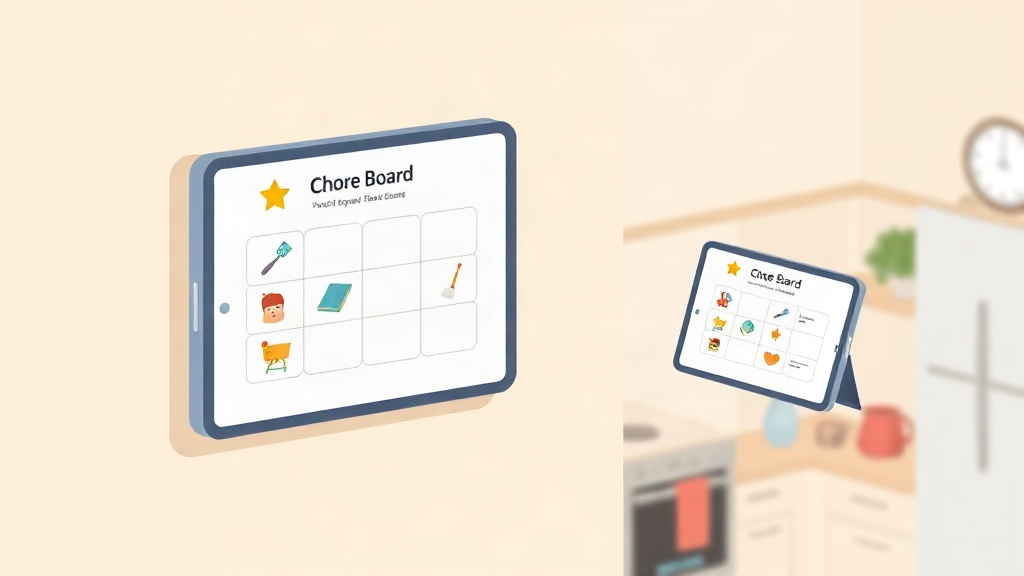
- Progress tracking - a visual record replaces the paper chart, so kids and parents can both see progress build over time.
- Co-parent sync - both households see the same task list and reward history, so a reward earned at one home is recognized at the other.
For a broader look at how digital and paper-based reward systems compare, Reward Systems for Kids That Actually Work breaks down what tends to hold up over time. You can also browse the KidKarma blog for more chore and reward strategies, or visit KidKarma to see how the app puts these principles into practice.
Best Practices for Reward Good Behaviour
Getting rewarding good behaviour right at home comes down to structure, not just good intentions. The following practices come up repeatedly in behavioral guidance and in what actually works day-to-day.
Build a Simple Reward Chart
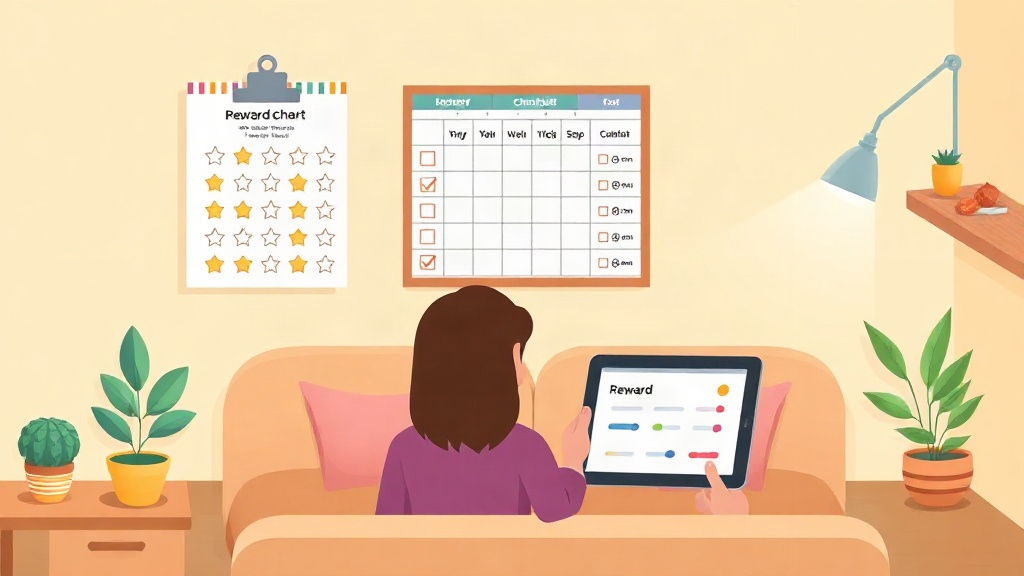
A reward chart for good behavior gives kids a visual way to track progress, which matters because young kids especially need to see that their effort is adding up. A basic chart can be as simple as:
- A grid with days of the week across the top
- Two to four target behaviors listed down the side
- A box to mark (sticker, checkmark, or stamp) each time a behavior happens
- A small reward tied to reaching a set number of marks
If you're building a chart around chores specifically, the family chore schedule template guide walks through how to structure one that fits your household's routine.
Follow a Repeatable Process
To reward good behavior at home consistently, most parents find success with a simple sequence:
- Pick two to three target behaviors - too many at once dilutes focus.
- Decide the reward type and size upfront, before the behavior happens.
- Deliver the reward close to the behavior, with a specific comment about what was done well.
- Track progress somewhere visible - a chart, app, or shared calendar.
- Review and adjust every couple of weeks as habits form or routines change.
Avoid Common Mistakes
Rewarding for good behavior can backfire when a few common errors creep in:
- Moving the goalposts - changing what counts as "good enough" after the fact erodes trust.
- Over-relying on material rewards - this can make kids expect a prize for every small task.
- Inconsistent follow-through - forgetting to deliver a promised reward teaches kids the system isn't real.
- Rewarding compliance out of relief rather than recognition - giving a reward just to stop a meltdown reinforces the meltdown, not the good behavior.
Pro Tip: If a reward stops working, it's often not the reward itself but the timing or specificity of the praise attached to it. Adjust the delivery before assuming the reward type has failed.
For households where a chore system has stalled entirely, Kids Won't Do Chores? 7 Strategies That Actually Work covers troubleshooting steps beyond the reward itself.
How Reward Good Behaviour Works
At its core, a good behavior reward system runs on a simple loop: behavior happens, feedback follows, and the brain files away the connection between the two. Repeat that loop enough times with consistency, and the behavior starts happening without needing the reward every single time - it becomes a habit.
This is where co-parenting consistency becomes critical. If one household rewards a made bed and the other ignores it, the loop breaks and the habit takes much longer to form - or never fully forms at all. Kids notice when rules and rewards shift depending on which parent or house they're in, and that inconsistency is one of the fastest ways a reward system loses its effect.
Keeping the loop intact across two households usually requires:
- Agreeing on the same target behaviors in both homes
- Using a shared way to track progress so both parents see the same data
- Aligning on reward types and sizes, even if delivery timing differs slightly
- Checking in periodically so adjustments happen together, not separately
Expert Advice: A shared, real-time view of progress removes the need for co-parents to rely on the child's own account of what happened - reducing disputes and keeping the reward loop consistent.